
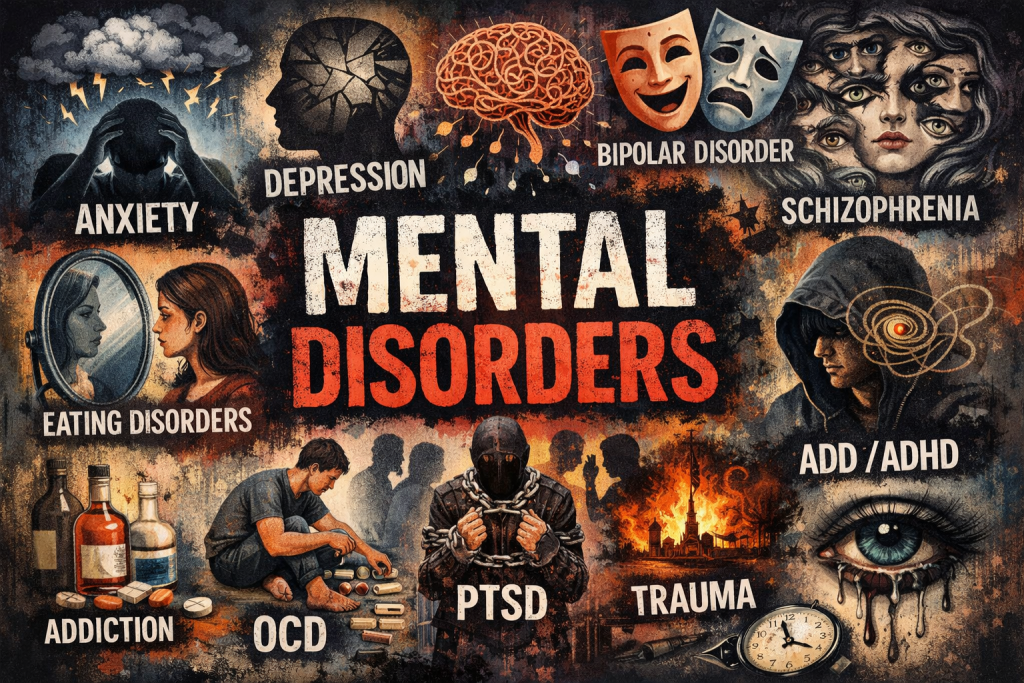
Discover the types of mental disorders, their symptoms, causes, and treatments in this complete guide to mental health awareness and understanding.
Introduction to Mental Health and Mental Disorders
Mental health forms a very crucial component of the general well-being. It influences the manner in which individuals think, feel, behave, and relate to others. Mental health, like physical health, is subject to change over time. Once they become disruptive to the normal way of life, these changes can be referred to as mental disorders.
What Are Mental Disorders?
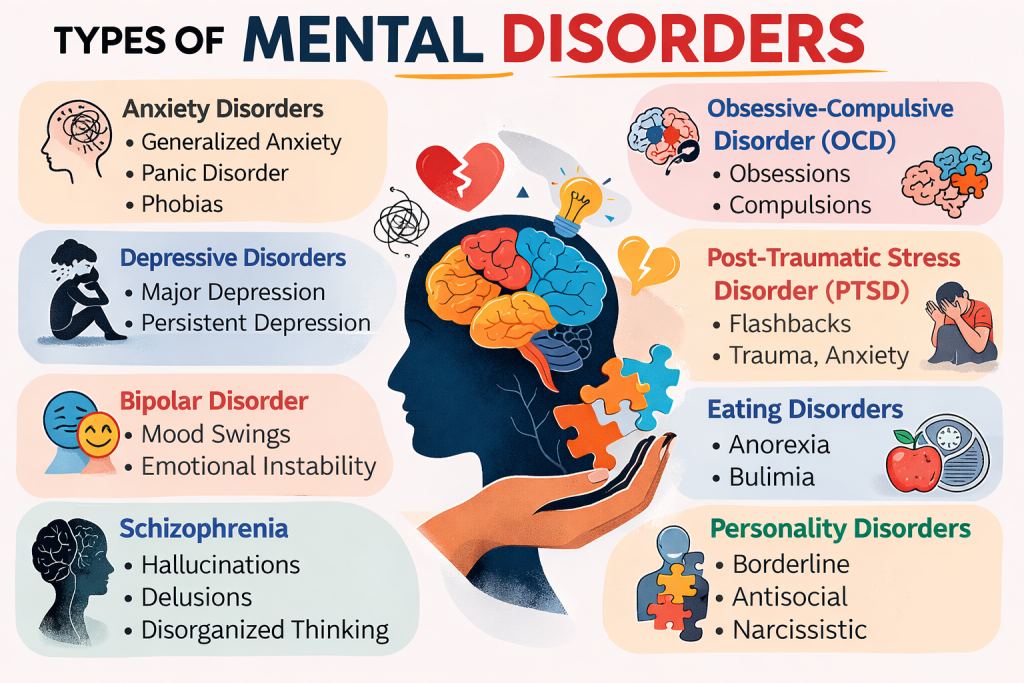
Mental disorders are conditions that affect thoughts, feelings, behavior, and the normal functions of a person. They have the capabilities of affecting mood, relations, and decision-making. The disorders are mild to severe and can be treated, medicated, and even rehabilitated under the supervision of a professional.
What Are Mental Disorder Symptoms?
The symptoms are different with the condition; however, some likely signs are:
- Persistent sadness
- Excessive worry
- Mood swings
- Withdrawal from others
- Changes in sleep
- Appetite changes
- Difficulty concentrating
- Delusions or hallucinations.
- Irritability
- Cessation of interest in activities.
What Is Mental Illness?
Mental illness is a medical disorder that influences how a person thinks, feels, behaves, and performs their daily activities. It may lead to distress and disruption of work, relationships, and life activities. Through treatment, support, and therapy, the symptoms can be managed.
Mental Health vs Mental Illness
Mental health is the general emotional and psychological condition of a person.
Mental illness (or mental disorder) is a term that is defined as particular diagnosed conditions that affect mental functioning.
In simple terms:
- Mental health refers to a state of well-being.
- Mental disorders are ailments that interfere with one’s well-being.
What Are the Types of Mental Disorders?
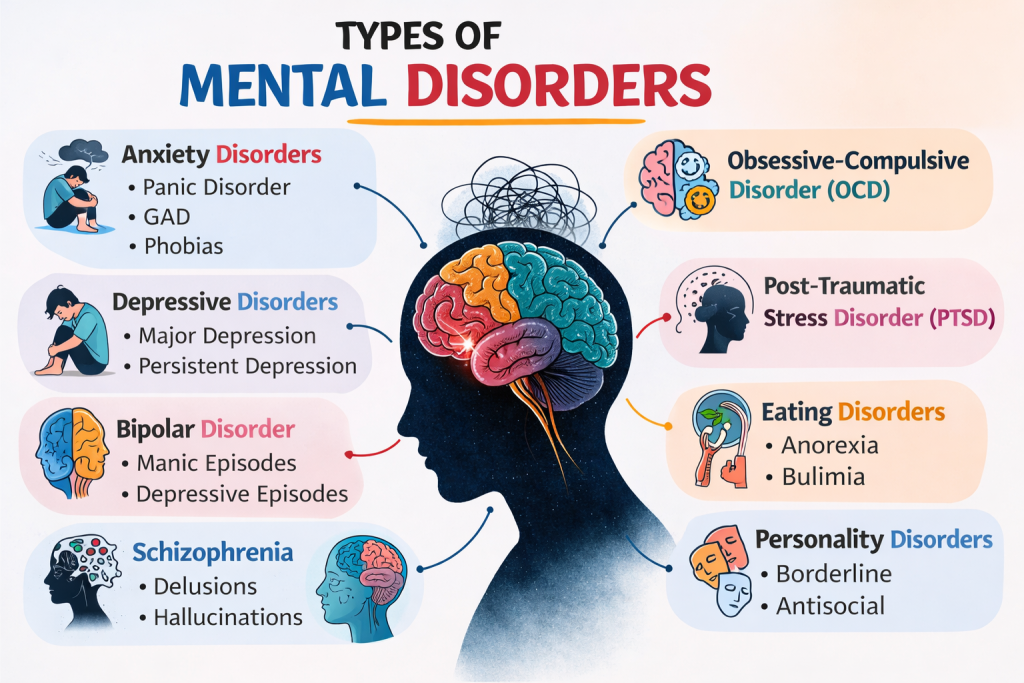
1. Depression
Depression is a mood disorder where a person is consistently dejected, apathetic, with no energy, and hopeful of nothing. It may influence sleep, eating, concentration, and daily life, and needs professional therapy and emotional care.
2. Panic Disorder
Panic disorder is an unpredictable and recurring sudden panic attack, leading to panic attacks that are accompanied by extreme fear, heavy heartbeats, breathlessness, and dizziness. These unforeseen episodes may disrupt normal existence and may, in most cases, have to be treated and medicated.
3. Schizophrenia
Schizophrenia is a serious mental illness that impacts thinking, emotions, and behavior. It can be accompanied by hallucinations, delusions, and incoherent speech. Detection of the symptoms at an early stage and continuous treatment help control the symptoms and enhance functioning.
4. Post-Traumatic Stress Disorder (PTSD)
PTSD occurs following exposure to or the presence of traumatic events. Symptoms consist of flashbacks, nightmares, anxiety, and emotional distress. It may interfere with normal life, yet therapy and counseling can go a long way in restoring and enabling the victims to cope.
5. Bipolar Disorder
The moods of bipolar disorder are so drastic (depression and emotional highs), which is why they are known as the highs (mania) and the lows (depression). Such changes influence the energy levels, decision-making, and behavior. Effortful treatment ensures the moods are stabilized and the balance in life is maintained.
6. Dementia
Dementia is a progressive disorder of the memory, thinking, and reasoning. It is prevalent in the elderly and affects everyday functioning. The most prevalent form of dementia in the world is Alzheimer’s.
7. Phobias
Phobias are extreme irrational fears of definite things, circumstances, or actions. Examples of common phobias are fear of heights, spiders, or flying. Such fears may restrict normal life, but can be cured through therapy.
Mental Disorder Causes
Mental disorders do not tend to have one cause. Rather, they grow up as a result of a complex of biological, psychological, and environmental factors. The knowledge of such causes assists in prevention, early diagnosis, and successful treatment.
1. Genetics
Genetics has significance in mental health. In case a close relative has a mental illness, there is a possibility of an even higher risk. There are specific genetic factors that predispose an individual to conditions such as depression, bipolar disorder, or schizophrenia.
2. Brain Chemistry and Function
The imbalances that may occur in brain chemicals, known as neurotransmitters, may influence mood, thoughts, and behavior. Mental disorders may also have a cause in changes in the structure or functioning of the brain. These biological aspects usually need medical interventions and treatment.
3. Life Experiences and Environment
Mental health conditions can be provoked by stressful events in life, which can include trauma, abuse, loss, or even significant life changes. An unpleasant surrounding, absence of social support, or constant stress can predispose an individual to develop a psychiatric condition.
Is It Possible to Have 4 Mental Disorders?
Yes. This is called comorbidity. Most of the individuals have more than a single mental disorder at a time. For example:
- Depression and anxiety
- ADHD and anxiety
- Substance use disorder and PTSD.
Comorbidity is widespread and easy to treat.
FAQs
1. Are mental disorders common?
Yes, mental disorders are highly prevalent globally and can impact millions of individuals, no matter their age, gender, culture, or background, and thus awareness and appropriate support are highly crucial in the modern day.
2. Can mental disorders be cured?
Most mental illnesses cannot be fully treated; however, they are treatable and manageable through therapy, medication, lifestyle modification, and the presence of a robust emotional and social support system.
3. Are mental disorders caused by weakness?
No, and weakness and the want of character do not cause mental disorders. They are illnesses, mental conditions, which are affected by biological, environmental, and emotional forces that an individual has no control over.
4. Can children have mental disorders?
In fact, children are capable of developing mental illnesses like adults. These changes can be observed early in life and may manifest as behavior changes, mood issues, learning issues, or emotional distress that needs professional assessment and help.
Conclusion
Mental disorders are typical medical conditions that influence behavior, thoughts, and emotions. This knowledge improves early diagnosis and effective treatment of their types, causes, and symptoms. Through effective support, treatment, and understanding, the victims can be able to tackle mental disorders and live with confidence and lead a healthy, productive life.