The air squat exercise builds leg strength, balance, and core strength using bodyweight only. Learn proper form, benefits, muscles worked, and home workout tips.
Introduction to Air Squat Exercise
The air squat exercise helps develop strength in your leg muscles, including the gluteus maximus, and core muscles, without the need for equipment. This type of exercise requires no special equipment; hence, it is convenient for beginners.
Performing this exercise helps in improving balance, flexibility, and endurance of your entire lower body. The air squats can be used as a tool for functional fitness training and can also promote good motor skills while performing daily tasks.
What Is an Air Squat Exercise
A definition of the air squat exercise is an exercise performed with only body weight. The air squat exercise is the squat, bending the knees and dropping the hips back, and standing up.
The basic squat exercise develops patterns of movement that will help with everyday tasks. The functional squat movement assists in sitting, standing, and moving objects.
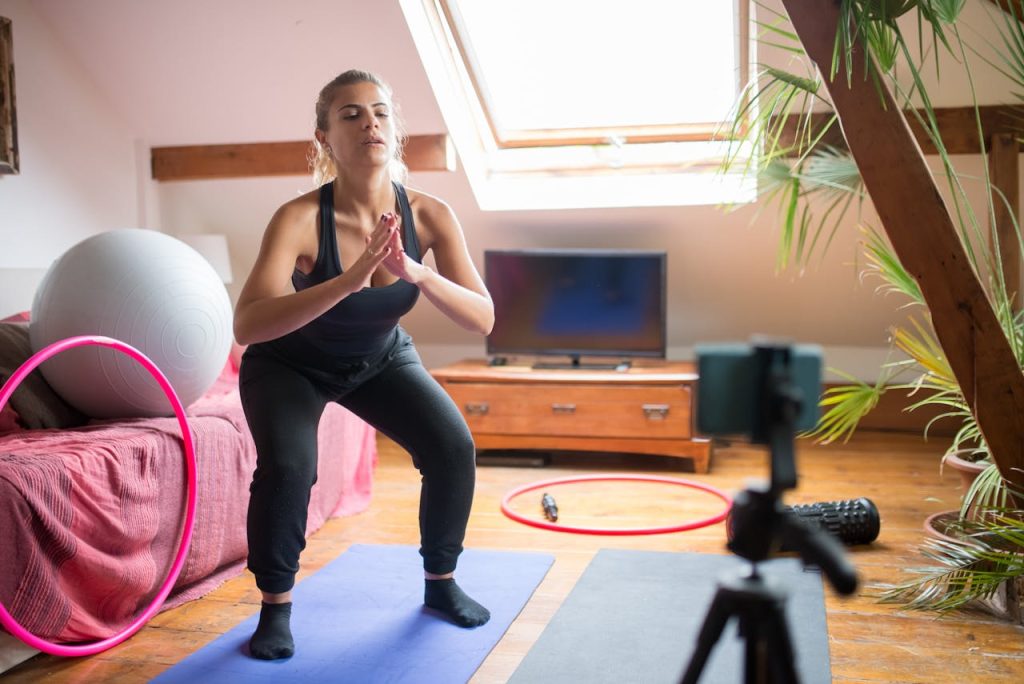
Air squat exercise doesn’t require any machine. The home fitness squat workout only uses open space. The squat workout is one of the exercises that can be done at home and makes you strong everywhere.
Main Reasons People Choose Air Squats
- Strengthens leg muscles
- Supports healthy movement
- Improves posture
- Trains the core
- Assists with balance and flexibility.
- Operates appliances in the home or yard
- Supports simple and complex exercises
- Supports fat-burning workouts
Body weight fitness training is also quicker to learn. A brief session will take just a few minutes.
Air Squat Muscles Worked
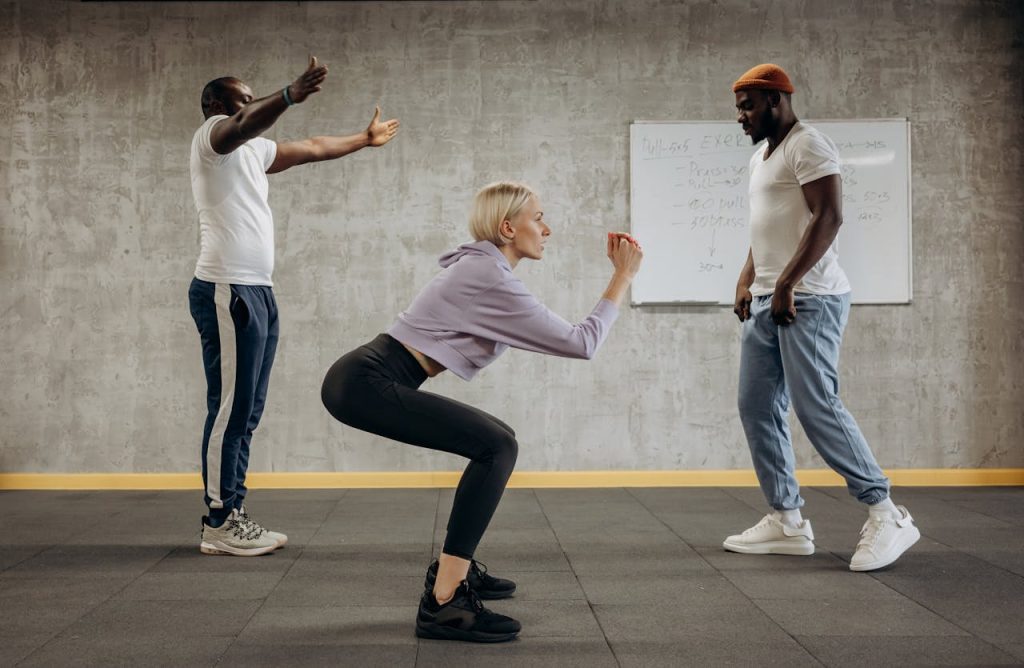
Quadriceps, glutes, hamstrings, core, and calves are all air squat muscles. This air squat exercise targets the lower body strength, stability, balance, and core control with simple bodyweight movement, without equipment or machines.
Main Muscles Used During an Air Squat Exercise
The following muscles are the main ones activated during an Air Squat Exercise:
1. Quadriceps
Quadriceps are located on the front of the thigh and help to generate movement at the knee during an air squat exercise. They are useful for extending the knees when moving from the squat position, aiding walking, running, jumping, and strengthening the legs in daily activities when standing up.
2. Glutes
During the air squat exercise, the glutes are highly active to lift the body from the squat position. Repeated body weight exercise training develops hip strength, postural support, lower body power, and shapes the buttocks.
3. Hamstrings
Hamstrings help to stabilize the knee and facilitate hip movement during the air squat exercise. They can help reduce the range of motion, support balance, and engage the glutes for seamless transitions, enhancing leg coordination, strength, and injury prevention during bodyweight leg workouts.
4. Core
The core muscles remain engaged in the air squat exercise to help keep the spine and body stabilized. Maintain balance, protect the lower back, increase control, and maintain upright positions throughout the repetition of every body weight squat exercise.
5. Calves
Balancing and stabilising in the exercise of air squats with calves. They regulate ankle motion when lowering and standing up, support body alignment, and aid the smooth movement of a squat without weights, home squat workout routines.
Air Squat Benefits
Air squat benefits include full-body strength, fat burning, mobility, and endurance. A great fitness, muscle-building, and daily movement exercise using the body weight of a squat exercise training without equipment.
1. Builds Leg Strength
Air squat exercise is used for leg strengthening, which benefits the quadriceps, hamstrings, glutes, and calves. This leg workout uses body weight to develop lower body strength, control movement, and enhance performance in everyday activities.
2. Supports Weight Loss
Squats for weight loss emphasize the use of large muscle groups to burn calories. Air squat exercise generates more energy, aids fat burning squat workout, and boosts metabolism for bodyweight conditioning workout and home fitness squat workout plans.
3. Improves Balance
Improved coordination, stability, and body control with functional squat movement in the air squat exercise. This lower-body weight exercise improves balance skills and promotes safe walking, running, and athletic squat exercise training.
4. Helps Core Strength
Squat exercise for core strength, abdominal, and lower back muscles is active. Air squat exercise helps to enhance posture, spinal support, and stability in bodyweight squat routine and daily activities.
5. Supports Home Fitness
Home squat exercise is performed without needing equipment or a gym facility. Air squat exercise is a beginner’s home workout squat, a simple squat exercise, and squats without weights for simple lower body exercise in small spaces.
6. Improves Mobility
Squat mobility exercise increases hip, ankle, and knee flexibility. The air squat exercise offers a better range of motion, functional squat, and improves the ability to move the body in daily living and fitness squat training sessions.
7. Increases Endurance
This endurance squat exercise helps build stamina and control of muscles. Air squat exercise helps to extend workouts, boost rep max, and improve bodyweight conditioning workout performance in whole body squat workout routines.
How to Do Air Squats
Air squat technique, air squat form, and controlled movement are important to learn to do air squats. Air squat exercise is a body-weight squat exercise for balance, posture, and strength.
Step-by-Step Air Squat Technique
Step 1: Stand Tall
Feet should be shoulder-width apart with toes angled slightly out. The exercise of the air squat starts with a good posture and a stable stance to guarantee good body alignment and stability.
Step 2: Tighten the Core
Use abdominal (core) muscles to keep the spine in place while performing the air squat exercise. This enhances posture, helps protect the lower back, and readies the body for an exercise movement involving body weight squat.
Step 3: Lower the Body
Slowly lean back and bend the knees. Air squat exercise utilizes a controlled lowering phase, such as the sitting in a chair exercise, to get a safe squat exercise at home, and knee friendly squat exercise practice.
Step 4: Keep the Chest Up
In the air squat exercise, maintain the chest up and maintain a straight back. The correct position of the air squat promotes balance, posture, and correct execution of body weight exercises for the legs.
Step 5: Reach Squat Position
Bring the lower body down to the thighs parallel position. The air squat exercise enhances strength, flexibility, and control in deep air squat exercise and beginner’s squat workout.
Step 6: Push Upward
Step forward with the right foot and get back into a standing position. Air squat exercise ends with full extension, supporting leg strengthening exercises, body weight glute exercise, and athletic squat exercise development.
Why the Air Squat Exercise Is Popular
The air squat is a common exercise due to its multiple muscle usage and suitability for different fitness levels. It is done when someone incorporates a beginner squat routine, a home-based fitness workout, or an overall full-body workout. Air squat helps develop strength, stability, and mobility skills. Being a home squat exercise means one can do it anywhere without the need for a gym.
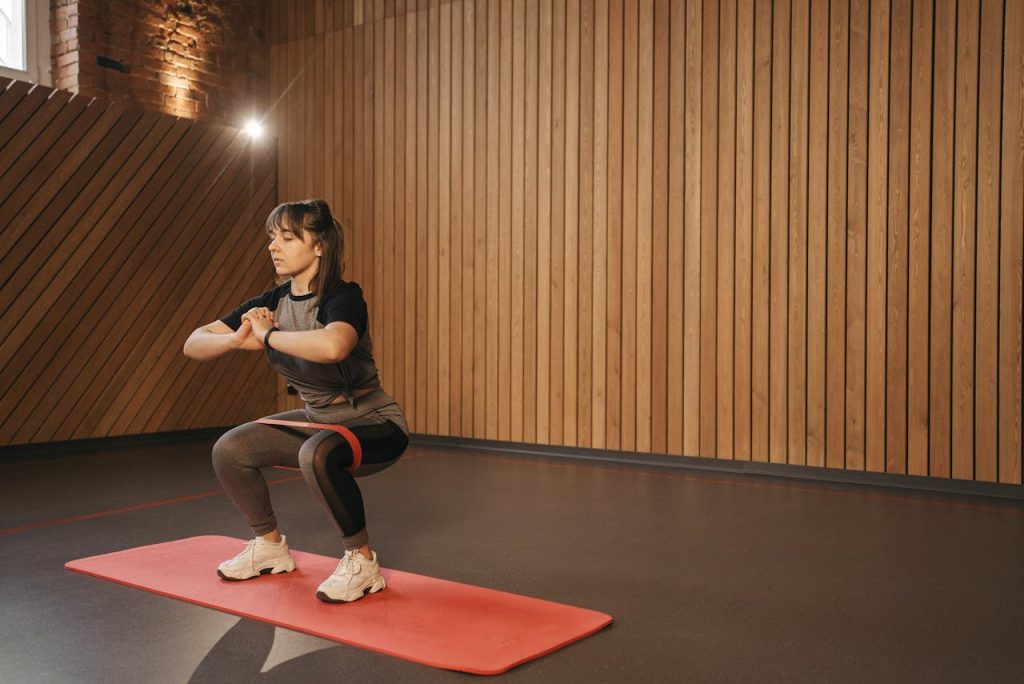
Common Mistakes and How to Avoid Them (Air Squat Exercise)
Loss of Lumbar Curve
Loss of lumbar curve occurs when the lower back arches during the air squat exercise. This leads to instability and a greater chance of injury. Remember to keep your chest upright and engage your core muscles. Maintaining a neutral spinal alignment during the exercise prevents injury and enhances the air squat technique.
Weight in the Toes
Placing your weight on your toes is a common problem in bodyweight exercises like squats. The pressure will move forward, causing imbalance and lack of control in your squats. Maintain weight on your heels or midfoot area and push yourself using the heels when rising from the squatting position.
Not Going Low Enough
Not squatting deep enough during the air squat exercise causes reduced muscle engagement. The effects will limit the benefits that can be attained by air squats on the legs and glutes. Squat to the point where the thighs are parallel to the ground surface.
Knees Caving In
Knees collapsing during the air squat exercise causes improper alignment and results in a higher risk of injury. Remember to ensure that the knees stay aligned with the toes during the exercise. This helps in improving the safety of squat exercises at home and enhancing proper air squat technique.
Knee-Friendly Squat Exercise Tips
A knee-friendly air squat workout emphasizes proper technique and form. Good form ensures joint safety. Alignment of knees with toes eliminates strain. Moving slowly helps maintain balance. Warming up before a workout prepares the body for exercise.
Home Fitness Squat Workout
The home fitness squat exercise is very convenient and efficient. This includes air squats and various exercises that only involve body weight. The benefit of such exercise is that you do not need to go to the gym, and it does not require any equipment. It can be easily incorporated into your daily schedule.
Healthy Bodyweight Exercises for Daily Fitness
The workouts that one can perform for achieving a healthy body weight include squats, pushups, and planks. Air squats play a critical role in this category of exercises. This exercise helps to improve strength and endurance without using any equipment.
Simple Lower Body Exercises for Beginners
Lower body training exercises consist of air squats, lunges, and step-ups. They will increase strength as well as help maintain good balance. These kinds of exercises are simple and can be easily integrated into a beginner’s program of squat exercises.
Air Squat Fitness Guide for Daily Use
The air squat exercise guide provides an aid in developing a healthy exercise routine for individuals. An exercise routine might be planned every week, with squats, days off, and light exercises being part of the regimen. This will ensure gradual improvement.
FAQs
Is the air squat exercise good for beginners?
Yes, air squats for beginners do develop strength, balance, and movement control, as well as body control and strength development without equipment.
Can the air squat exercise help with weight loss?
Yes, squats for weight loss do burn fat by increasing heart rate and calorie burning due to repeated high-repetition movements with bodyweight alone.
Is the air squat exercise safe for the knees?
Yes, knee-friendly squats are done safely, provided the air squats are done with correct form, maintaining alignment at all times.
Can I do the air squat exercise at home?
Certainly, home squatting is an excellent workout that does not require any equipment, space, or machines; thus, it suits every day indoor workout routine perfectly well.
Conclusion
The body-weight squat exercise provides benefits in terms of strength, balance, and mobility without any equipment. Body-weight squats can be done easily by both beginners and people with high levels of fitness. The exercise will benefit your legs, buttocks, and core. Besides, body-weight squats improve your endurance and fat-burning ability.