
Discover the benefits of kettlebell exercises for strength, cardio, mobility, and fat loss. Perfect for all fitness levels with full-body, functional workouts.
Introduction
A kettlebell is a ball-shaped weight made of cast iron or steel, with a flat bottom and a top handle. Compared to conventional dumbbells, the non-orthodox kettlebell form enables dynamic movement, swinging, and full-body exercises. Kettlebells were created in Russia for strength training and physical conditioning, but nowadays they have become a staple of gyms and home workouts worldwide.
Kettlebell Exercises
A kettlebell is a cast-iron or steel ball-shaped weight with a handle. Unlike dumbbells, kettlebells can be used to perform dynamic, swinging exercises that involve multiple workgroups. Kettlebell exercise is a type of functional and strength training that requires resistance, cardio, and mobility training during a single workout.

Kettlebell exercises are versatile and therefore beautiful. They are applicable in strength training, endurance training, balance, and even fat burning. Kettlebells are available in workouts that are both challenging and easy, depending on your fitness level, whether you are a beginner or a professional athlete.
Why Kettlebell Workouts Are So Effective
The unique feature of kettlebell workouts is that several fitness elements are incorporated into a single exercise. Kettlebell exercises involve the entire muscle chain rather than just a single muscle.
Full-Body Engagement Explained
The majority of kettlebell drills use legs, hips, trunk, shoulders, and arms simultaneously. This whole body engagement enhances metabolism and muscular coordination.
Strength, Cardio, and Mobility in One Tool
Kettlebells are movable, unlike conventional weights. This increases heart rate while strengthening it, offering cardiovascular and resistance training in a single session.
The five best kettlebell exercises you must try
1. Kettlebell Swing
The kettlebell swing helps to build the posterior chain, enhance hip strength, and enhance cardiovascular endurance. The kettlebell routine activates the glutes, hamstrings, and core, all of which will yield explosive strength and conditioning.
2. Turkish Get-Up
The Turkish get-up is a complete exercise that builds core strength and shoulder stability and improves coordinated movement. It enhances the ability to maintain one’s position, the quality of movement, and the strength useful in everyday scenarios, all while engaging several muscle groups.
3. Goblet Squat
Goblet squats primarily engage the quads, glutes, and hamstrings, and also help maintain proper posture. The kettlebell’s position at the chest keeps the torso straight and enhances core control.
4. Kettlebell Clean and Press
The clean and press is an exercise that builds upper-body strength, endurance, and power simultaneously. It consists of shoulders, arms, and core, and thus the whole of a person’s capability in producing motion, coordination, and aerobic fitness is developed for dynamic performers.
5. Kettlebell Windmill
The kettlebell windmill enhances shoulder stability, oblique strength, and hip mobility. This workout improves core stability, flexibility, and balance, which is suitable for functional strength and overall body coordination.
Benefits of Exercise Using a Kettlebell
Kettlebell exercises are different from traditional weight training. They use one exercise tool that incorporates strength, endurance, flexibility, and cardiovascular conditioning.
1. Full-Body Workout
Kettlebell exercises tend to engage two or more muscles simultaneously. You may swing, clean, snatch, or Turkish get-up with legs, core, back, shoulders, and arms at the same time, giving you an effective whole-body workout.
2. Improved Functional Strength
Kettlebell exercises are like real-life movements, while machines emphasize the strength of a single muscle. Thus, functional strength increases, and lifting, bending, or carrying objects becomes easier.
3. Cardiovascular Benefits
Kettlebell exercises such as swings and snatches can deliver high-intensity workouts that increase heart rate; thus, with one workout, you get both strength and cardio benefits.
4. Enhanced Core Stability
Kettlebell practice mostly consists of activities that involve balance and control, thereby working the deep-tension parts of the core. These benefits include improved posture, reduced risk of injury, and better balance.
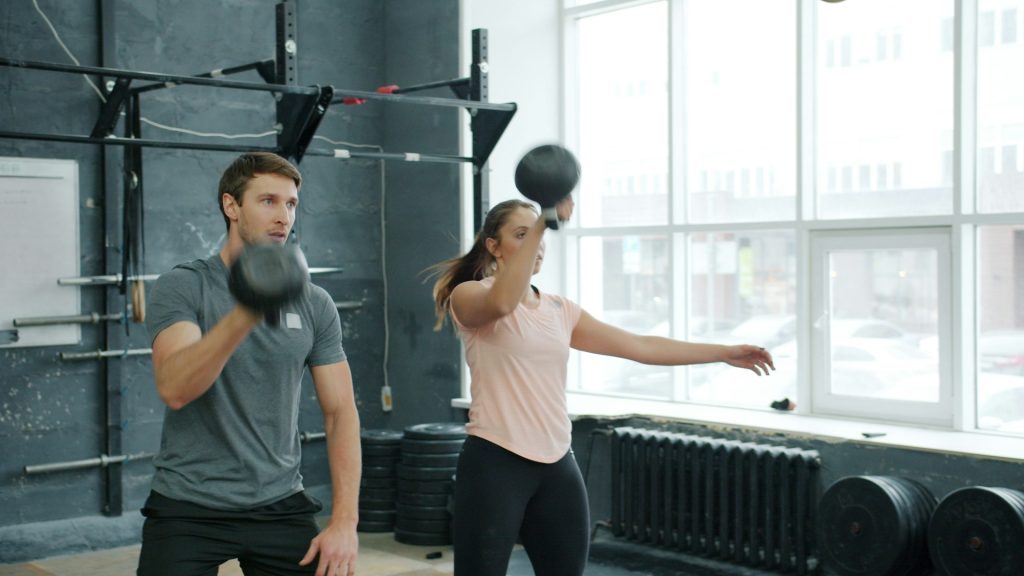
5. Fat Loss and Metabolism Boost.
Kettlebell exercises are very effective for burning calories because they are both strength and cardio workouts. Daily workouts can also raise metabolism and encourage fat burning.
6. Flexibility and Mobility
Kettlebell dynamic exercises enhance joint mobility and flexibility, particularly in the hips, shoulders, and spine.
Why Kettlebell Exercise Is Different from Traditional Workouts
Functional Movement Patterns
Functional training is a major feature of interval training; exercises replicate daily activities such as lifting, bending, and twisting. This enhances strength in life and reduces the risk of injury.
Strength and Cardio Combined
Kettlebell workouts are an effective form of cardio exercise, unlike most weight-training programs that focus solely on building muscle strength. An intense body workout can be a quick kettlebell routine that helps one build muscle and burn fat simultaneously.
Who Can Do Kettlebell Exercises
Kettlebell exercise is appropriate in:
- Novices with their first steps towards fitness.
- Athletes who want to gain functional strength.
- Seniors who deal with balance.
- People who train at home or in gyms.
Kettlebell training can be valuable to virtually anyone with proper instruction and the right weights.
How to Start Kettlebell Training
1. Choose the Right Weight
The initial kettlebell mass should be lighter (812 kg for men and 48 kg for women) to master the correct technique without injury.
2. Learn Proper Form
It is important to have the correct posture. Pay attention to hip-hinge swings, use the core, and maintain a neutral spine.
3. Start with Basic Exercises
It is recommended to start with basic exercises, such as swings, goblet squats, and rows, and then progress to more complex exercises, such as snatches and Turkish get-ups.
4. Warm-Up and Cool Down
You should always warm up your body by doing dynamic stretches and mobility exercises. This step should occur after training to help prevent muscle soreness by engaging in cool-down stretches.
5. Follow a Structured Program
Incorporate kettlebell workouts into a program that targets all body parts (major muscle groups) and places equal emphasis on strength, cardio, and mobility.
- Tips for Safe Kettlebell Training: Do not let your back round while performing the swings or squats. Always keep the core engaged. The movements should be deliberate, with no jerking or tossing of the kettlebell. Gradually progress with lighter weights and, over time, add more heaviness.
- Follow the professionals’ instructions for complex exercises.
Intermediate and Advanced Kettlebell Exercises
The movements can become more complicated as strength and technique improve.
Turkish Get-Up
The Turkish get-up enhances overall body strength, shoulder stability, core control, movement, and coordination, making it a perfect progression for functional fitness.
Kettlebell Clean and Press
The clean and press builds explosive upper-body strength, works shoulders, arms, and core, and makes one stronger and more functional.
Snatch and Windmill
The kettlebell snatch and windmill challenge is known to provide excellent full-body conditioning and stability through the advanced flexibility, stamina, and core strength.

Kettlebell Training for Different Fitness Goals
1. Strength and Muscle Building
Concentrate on heavy kettlebell exercises and compound exercises to increase muscle mass and strength.
2. Fat Loss and Conditioning
You should do high-rep swings, snatches, and circuit exercises to burn calories, and cardiovascular fitness will also improve.
3. Mobility and Flexibility
Kettlebell halos and Turkish get-ups are power exercises that can enhance joint mobility and functional movement.
4. Rehabilitation and Core Stability
Controlled kettlebell exercises help the recovery process by strengthening and stabilizing muscles and enhancing balance.
Kettlebell vs. Dumbbell Training
Dumbbells are perfect for isolation exercises; on the other hand, kettlebells are best for dynamic, whole-body movements. Kettlebell training complements dumbbell workouts by enhancing coordination, explosiveness, and functional strength.
Conclusion
Kettlebell workouts are very versatile and can be considered whole-body workouts; they also blend weight training, cardio, and mobility. Everyone can do them, from the newbies up to the pros, and they all receive the same benefits: loss of fat, functional strength, core stability, and flexibility. Regular kettlebell practice improves fitness, coordination, and the ability to perform movements in real life.