Discover the best exercise for coordination. Learn how jump rope, balance drills, juggling, and agility training improve movement and fitness.
Coordination is defined as the capacity to coordinate various parts of the body smoothly and efficiently. Improved coordination will result in improved balance, increased agility, improved reaction time, and better physical performance. Coordination exercises benefit not only athletes but also anyone interested in improving their physical performance and avoiding injuries.
What Is Coordination in Fitness?
Coordination is the ability of the body to perform movements with accuracy and efficiency, coordinating muscles, joints, eyes, and the nervous system. It is used for catching a ball, climbing stairs, dancing, running, and changing direction rapidly.
Benefits of improved coordination include:
- Improved balance and stability
- Reduced risk of falls and injuries
- Faster reaction times
- Enhanced sports performance
- Better posture and better use of the body during movements.
- Higher self-confidence in physical activity
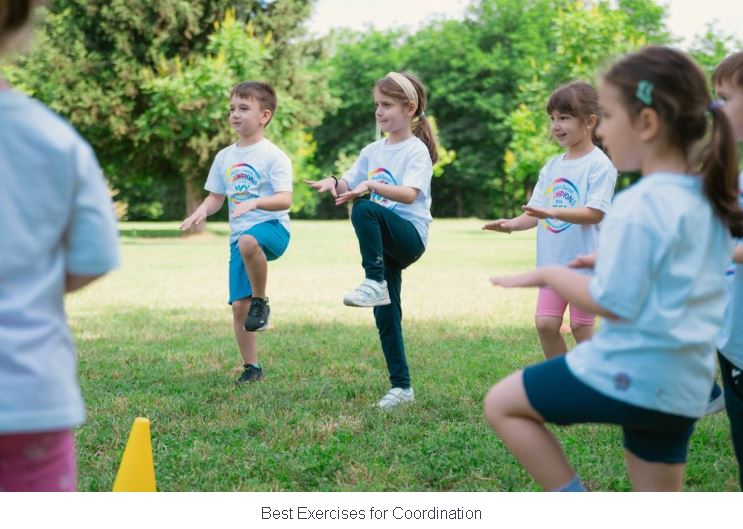
Best Exercise for Coordination
The best exercise for coordination is the jump rope. Hands, feet, eyes, and the brain are all needed throughout the jumping rope activity. It enhances both balance and timing, rhythm, footwork, and cardio all in one, so it is a great coordination workout for all fitness levels.
Why Jump Rope Is Excellent for Coordination
- Develops hand-eye-foot coordination
- Enhances the accuracy and fluency of time and rhythm
- Develops agility and balance
- Strengthens lower-body muscles
- Boosts cardiovascular endurance
- Taps into quick reactions and control of movement
Jump rope practice can achieve good improvements in coordination after just 10-15 minutes a few times a week.
Top 7 Best Exercises for Coordination
The following exercises were chosen for multi-joint involvement, neural challenge, and transferability to daily life and sport.
01. Jump Rope – Best Overall
This is one of the best coordination drills as it involves timed hand, foot, and eye coordination. Exercises with constant rhythm provide benefits in terms of timing, balance, agility, and an awareness of the body, as well as cardiovascular fitness and reaction speed, due to repetition of controlled movement patterns.
02. Ladder Drills – Top for Athletes
Ladder drills increase speed, agility, and neuromuscular skills as it requires the player to change their foot movements quickly. These drills boost athletes’ reaction time, direction, and precision of movement, making them great for sports with fast, frequent speed and position changes.
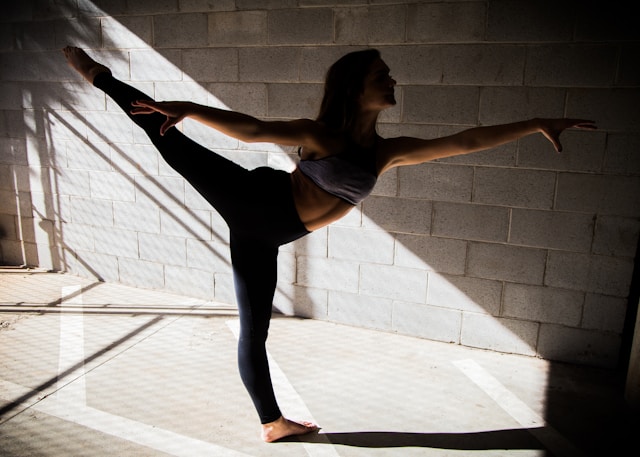
03. Single-Leg Balance – Best for Seniors
Single-leg balance exercises help build stability in the muscles that surround the ankles, knees, and hips. They help to increase postural control, decrease fall risk, and increase body awareness. Seniors who practice regularly will continue to have mobility, independence, and confidence in their daily movements and activities.
04. Ball Toss & Catch – Best for Kids
Improves hand-eye coordination, concentration, and quick reactions with ball toss and catch. Users are challenged by varying the size of the balls, the angle of throw, or the catch. This activity is great for improving coordination, concentration, and motor skills in children and adults.
05. Tai Chi / Yoga Flow – Best for Recovery
The slow rhythmic movements of tai chi/yoga enhance balance, flexibility, and body awareness. These exercises help to build the mind-body connection, increase coordination, and aid recovery through stability, breathing control, and effective movement mechanics.
06. Juggling – Brain Booster
Handling problems, visual tracking, timing, and hand-eye coordination at the same time. Studies indicate that juggling benefits brain development in regions controlling motor control and spatial awareness. It enhances focus, quickness, and coordination, and offers entertainment to the brain.
07. Bosu Ball Squats – Strength + Control
Bosu ball squats are a combination of strength and balance exercises. The unstable surface forces require constant adjustments in the muscle activity of the lower body and core. This exercise improves coordination, stability, joint control, proprioception, and functional strength for daily activities.
Comparison Table: Exercises at a Glance
| Exercise | Difficulty | Equipment | Best For | Muscles Involved |
| Jump Rope | Moderate | Jump rope | Full-body timing | Calves, core, shoulders |
| Ladder Drills | Moderate | Agility ladder | Footwork speed | Legs, hip flexors |
| Single-Leg Balance | Easy | None | Balance, stability | Ankle, glutes, core |
| Ball Toss & Catch | Easy | Ball | Hand-eye speed | Shoulders, forearms |
| Tai Chi / Yoga | Easy | Mat (optional) | Mindful movement | Full body |
| Juggling | Hard | 3 balls | Neural adaptation | Arms, eyes, brain |
| Bosu Ball Squats | Moderate | Bosu ball | Strength + balance | Quads, core, ankles |
Benefits of Jump Rope for Coordination
The benefits of playing jump rope include better hand-eye-foot coordination, balance, agility, and reaction time. It is good for brain function, enhances athletic capabilities, and offers a complete body workout with effective calorie burn, muscle strengthening, and enhancement of overall stability and body control.
How to Build a Weekly Coordination Training Plan
If you want to make measurable progress, organise your time in the week around three zones of coordination training:
Day 1 — Rhythm & Timing (20 min)
Use 5 minutes of beginner (bounce) and advanced (double unders) jump rope. Complete 3 rounds of agility ladder patterns in: in-out, lateral shuffle, and icky shuffle. This session activates the fast-twitch neural pathways.
Day 2 — Balance & Proprioception (15–20 min)
Single leg balance progressions: eyes open (30s each side) → eyes closed → introduce head turns. Complete with Bosu ball squats (3 x 10 reps). In this session, you will develop your kinesthetic awareness further.
Day 3 — Fine Motor & Cross-Body Integration (15 min)
Ball toss – 5 mins, juggling practice – 10 mins. These exercises require the two hemispheres of the brain to communicate both with each other and with the body, leading to the longest-lasting coordination benefits.
- Pro tip: Add variety every 3 or 4 weeks. The brain is very responsive to known patterns. Use cone weaves instead of ladder drills or use a reaction ball rather than a tennis ball to maintain an elevated neural recruitment.
Why Coordination Exercises Matter
Coordination training builds the link between the brain and muscles. The more accurate your body becomes at performing the movement, the more control you’ll have, the quicker you’ll react, and the more efficient your movement will be. This can have a positive effect on athletic performance, activities of daily living, and fitness.
Best Coordination Exercises by Goal
For seniors and fall prevention
Clinically proven fall-reducing activities include single-leg balance, heel-to-toe walking, and Tai Chi. One study in the British Journal of Sports Medicine in 2020 actually discovered that balance training reduced the likelihood of falls by as much as 23% in adults aged 65 and older.
For athletes and sports performance
Agility ladder drills, reactive ball catches, and plyo variations of ball rope develop the rate of accuracy that differentiates elite athletes. Combine with sport-related exercises for optimal transfer.
For children and motor development
Ball games, hopscotch, and swimming are good during developmental windows (ages 6-12). These activities build basic movement skills that are the building blocks for all future learning in athletics.
For neurological recovery (stroke, Parkinson’s)
Neuroplastic recovery is stimulated by repetitive, rhythmic movements such as marching in place, catching large foam balls, and slow tai chi sequences. Always work with a physiotherapist to tailor intensity.
How Often Should You Train Coordination?
2-4 times a week is the optimal number of times that most people can benefit from coordination training. Sessions may be brief and run 10-20 minutes long, and can be integrated into any workout.
It is more important to be consistent than intense. Practice makes perfect – over time, the brain and muscles will develop more efficient movement patterns with regular practice.
Signs Your Coordination Is Improving
You may notice:
- Improved balance while engaging in activities
- Smoother movement patterns
- Faster reaction times
- Sports with greater confidence.More confidence in sport.
- Better agility and body control.
- Fewer trips, stumbles, or movement errors
Tips to Improve Coordination Faster
- Perform coordination exercises regularly.
- Begin gradually and emphasize form.
- Progress in difficulty incrementally.
- Include both balance and agility exercises.
- Maintain physical activity all week long.
- Try out different movements as challenges.
Cons of Jump Rope Exercis
1. High Impact on Joints
The jump rope exerts repetitive strain on the knees, ankles, and hips, which makes it unsuitable for those suffering from joint pains or injuries.
2. Requires Practice
It might be difficult for novices to coordinate well as well as time their jumps in rhythm, and this can result in frustration until they learn the right techniques.
3. Risk of Tripping
Wrong rope speed, timing issues, or poor skill in jumping can lead to frequent trips, which could easily result in accidents, small injuries, and a lack of confidence.
4. Not Suitable for Everyone
Individuals with serious balance issues or joint disorders should consider less risky workouts as opposed to engaging in jump rope training exercises.
5. Can Cause Fatigue Quickly
Jump rope training exercise is a high-intensity activity that will leave you exhausted quite quickly if you are just starting. This may limit your exercise time.
FAQs
How long does it take to improve coordination?
The majority of individuals experience measurable results within 3-4 weeks. More significant progress will take place after about 6-8 weeks when the brain develops new motor programs through consolidation.
Can adults improve coordination, or is it only for children?
Certainly. Although young individuals benefit from neural plasticity windows and develop coordination faster than adults do, there is still no limit on age when adults cannot learn new motor skills.
Is yoga good for coordination?
Absolutely. Through proprioception, posture control, and mindfulness of transitions, yoga can increase coordination abilities in any individual, regardless of age, health condition, gender, etc. As for types of yoga, vinyasa flow yoga should be mentioned because it requires smooth movements between poses.
Conclusion
Coordination is an essential element of physical fitness, which helps to develop balance, flexibility, and reaction time and make movements more efficient. Jumping rope still stands as the best coordination exercise, while there are many different exercises, such as ladder training, balance exercises, juggling, and Tai Chi, which provide distinct advantages.