
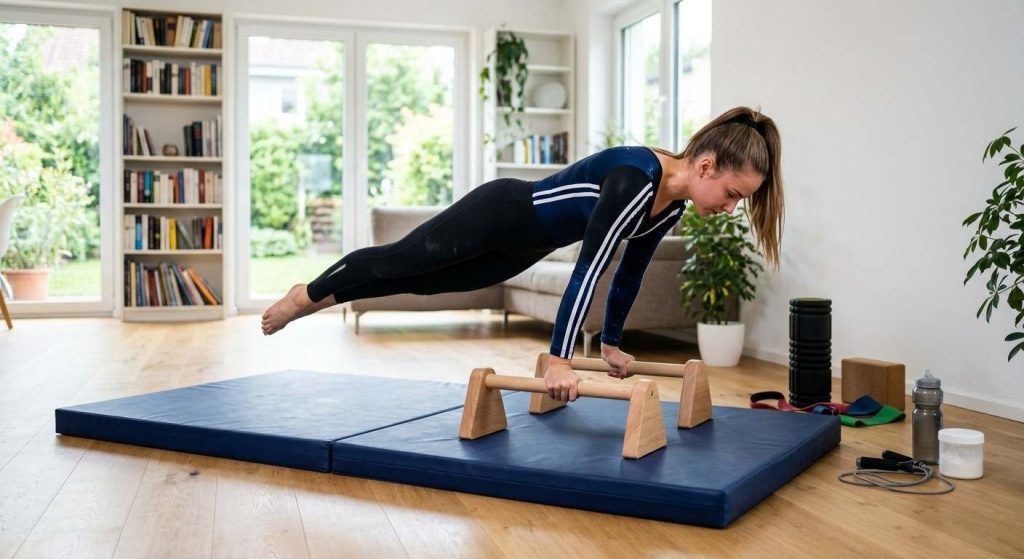
Discover effective gymnastics workouts for strength, flexibility, balance, mobility, and body control with beginner routines, home exercises, and expert tips.
Gymnastics Workouts incorporate strength, flexibility, balance, coordination, mobility, and body control. Unlike most other workout programs, gymnastics workouts rely on controlled movements for developing functional strength through movement efficiency.
The program is versatile enough to help beginners, adults, kids, and even seasoned athletes. Bodyweight Gymnastics workouts, Strength Gymnastics workouts, and Mobility workouts can enhance core stability, upper body strength, balance, posture, and overall movement efficiency without the need for much equipment.
What Are Gymnastics Workouts?
Gymnastics Workouts consist of exercises and skill drills that incorporate techniques used in artistic gymnastics and other related activities. Some of the skills involved include floor exercises, handstands, jumping, holding, pulling, flexibility drills, and apparatus skills.
How Gymnastics Training Differs from Traditional Strength Training
In conventional strength training, one has to lift external weights. Gymnastics involves strength conditioning through body placement, leverage, balance, and control of movements.
There are multiple aspects of the body that could be trained through gymnastic conditioning. Take a handstand as an example. It trains shoulders, wrists, core, balance, and coordination all at once.
With bodyweight gymnastics strength training, one can also advance in skills by manipulating leverage, holding positions for a longer period, refining techniques, or advancing into difficult gymnastics skills. This makes gymnastics strength training a very valuable skill to have.
Key Benefits of Bodyweight Gymnastics Training
How regular practice can help you:
- Build core strength and stability
- Improve shoulder and wrist control
- Increase flexibility and mobility
- Develop balance and coordination
- Boost relative strength
- Gain body awareness
- Control movement
This is the reason why exercises related to gymnastics can be beneficial for running, weightlifting, martial arts, sports, and overall fitness.
Best Gymnastics Workouts for Beginners
A beginner must start with the basics before he or she masters the more difficult techniques. Begin by performing exercises that are easy to do and slowly increase their difficulty.
Basic Gymnastics Conditioning Exercises
Effective gymnastics training exercises are squats, lunges, push-ups, planks, arch holds, hollow holds, and jumps. A novice will be able to execute two to three repetitions of each exercise while maintaining correct form. Such exercises are essential for building up the basics that are necessary for performing handstands, tumbling, pull movements, and more.
Core and Hollow Body Holds
In any gymnastics exercise, the core is very significant. The core and hollow body holds train athletes on how to have a strong body position as they move. Begin with short holds of 15–20 seconds and gradually increase the time or extend the limbs. The core and hollow body holds also assist in training athletes on trunk control for handstands and tumbling.
Handstand Progressions for Beginners
Handstand progression will be helpful for beginners to learn balancing step by step. Begin with wall-supported handstands, practice shoulder placement, controlled kick-up, and balancing exercises. The ribs should remain under control, and use the shoulders properly. Practicing handstand progression may increase balance and awareness of the upper body without rushing to freestanding handstand.
Gymnastics Strength Training Exercises
The strength of the body is the starting point of advanced gymnastics. The strength exercises in gymnastics should include the strength training of the upper body, core, legs, and stabilizer muscles.
Pull-Ups, Dips, and Muscle-Up Progressions
Pull-ups work the back, arms, and grip muscles. Dips work the chest, shoulders, and triceps. Athletes who have already developed pulling and pushing strength may move on to pull-ups and muscle-ups. Beginners may try assisted pull-ups, negatives, and hanging exercises. Pull-ups and muscle-ups take time to practice because technique is just as important as strength.
Parallel Bars and Rings Workouts
Parallel bars and rings offer tough methods of building stability and upper body strength. Exercises that include ring supports, ring rows, dips, and support transitions can help build shoulder and arm strength. It is important for athletes to begin with easier moves before trying harder skills. Both parallel bars and rings require increased stabilization compared to most other exercises, which is why they can be incorporated into advanced gymnastics workouts.
Leg and Glute Strength Drills
Good legs allow one to jump, land, vault, and tumble. Bodyweight squats, split squats, calf raises, lunges, and controlled single-leg exercises constitute good training for the lower body. These exercises should be included at least twice or thrice a week in your gymnastics strength training routine.
Gymnastics Flexibility and Mobility Drills
Flexibility is essential for good form and ease of movement. Make sure to include mobility and flexibility exercises as part of your warm-up routine, cool-down, or mobility session.
Shoulder and Wrist Mobility
Gymnastics puts a lot of strain on gymnasts’ shoulders and wrists. It is beneficial to include gentle wrist circles, wrist stretches, shoulder rotations, wall slides, and overhead motions to prepare those joints for training.
Start performing flexibility and mobility exercises slowly. Do not force painful ranges of movement. With consistent practice, mobility work will allow gymnasts to perform handstands, bridges, and overhead positions more easily.
Splits and Bridge Stretching Routines
Splits demand continuous work on flexibility. Bridges demand shoulder, spine, and hip mobility. Instead of bouncing, use slow and controlled stretches. A proper routine including mobility and flexibility exercises will allow gymnasts to develop better range of motion.
At-Home Gymnastics Workout Routine (No Equipment)
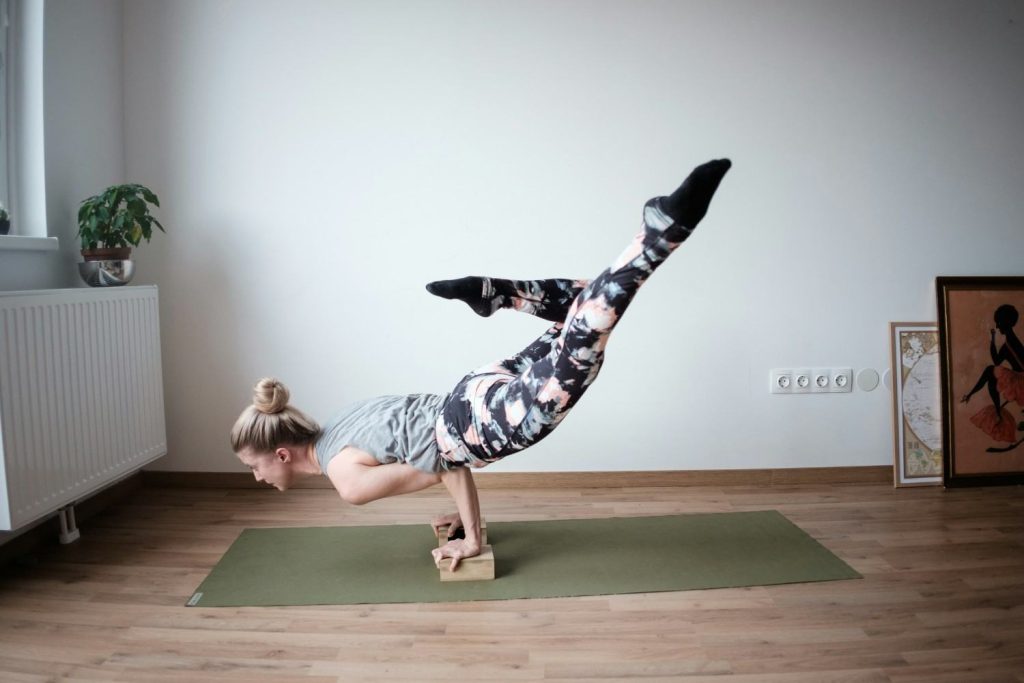
Many basic exercises need not involve any equipment at all. Gymnastics training at home can entail exercises like squats, push-ups, planks, hollow holds, lunges, bridges, and practicing handstands against a wall.
Weekly Gymnastics Workout Plan
Design your week in such a manner that you get adequate rest.
| Day | Primary Focus | Key Exercises |
| Monday | Push & Core Focus | Handstand Progressions, Hollow Body Holds, Scapular Push-Ups |
| Tuesday | Active Mobility & Flexibility | Wrist Drills, Thoracic Extension, Splits & Bridge Holds |
| Wednesday | Rest / Light Cardio | Active Recovery, Walking, Gentle Stretching |
| Thursday | Pull & Lower Body | Pseudo Planche Push-Ups, L-Sit Holds, Pistol Squat Progressions |
| Friday | Skill Mastery | Free Handstand Balancing, Tumbling Basics, Ring Holds |
| Weekend | Active Recovery | Full Body Mobility Work, Rest |
A well-structured workout schedule for gymnastics should comprise recovery days. It is recommended to refrain from practicing any skills that require perfect technique if one is too tired.
Sample 30-Minute Full-Body Routine
Gymnastics at-home workouts should consist of:
- 5 minutes of warm-up
- 3 sets of squats
- 3 sets of push-ups
- 3 sets of hollow holds
- 3 sets of lunges
- 10 minutes of handstand progressions
- 5 minutes of mobility
This basic procedure provides the means to have gymnastics workouts at home without spending on specialized gym equipment.
Gymnastics Workouts for Different Levels and Ages
The ideal procedure will depend on one’s experience, aim, age, agility, and training environment. For beginners, gymnastics workouts should emphasize basics, while for advanced performers, challenging moves are preferred.
Gymnastics for Adults
Gymnastics training for adults can assist with strength, flexibility, coordination, and body control. Adults should choose exercises that correspond with their present ability level and not imitate advanced procedures. A basic plan for muscle building through gymnastics exercise will involve push-ups, pull-ups, dips, squats, holds, and increasing resistance.
Gymnastics Workouts for Kids
Workouts for gymnastics must be geared toward movement, coordination, balance, flexibility, and skill development at an appropriate level for the age group.
Kids should practice under appropriate supervision, especially when using apparatus. Workouts for gymnastics for kids must be fun and not include any intensity or advanced techniques practiced without proper training.
Advanced Gymnastics Training for Athletes
Advanced athletes can work on pull-ups, muscle-ups, tumbling, handstands, rings, and apparatus. Tumbling and floor exercises can help build coordination, power, landings, and technique.
More advanced practice includes balance beam, pommel horse, and vault apparatus practice, and even more focused training with apparatus. Advanced strength can also be built with parallel bars and rings.
Gymnastics Equipment for Home
Home gymnastics equipment can provide additional training possibilities. The right home gymnastics equipment includes a gymnastics floor, resistance bands, parallettes, pull-up bars, rings, and proper flooring.
Selecting equipment depends on how much space you have and your skill level. Home gymnastics equipment should be sturdy enough to support the athlete while allowing for comfortable exercise.
For athletes engaged in balance beam training, it is essential to choose equipment that suits their skill level. Pommel horse and vault training requires special equipment, not just furniture.
Warm-Up, Recovery, and Injury Prevention
Warm-ups and injury prevention must be at the forefront of each training session. Begin with easy movements, mobility of joints, and increasingly difficult variations of the exercises that you are about to do.
Recovery is also important. Proper sleep, hydration, correct nutrition, rest days, and proper progression will help your body adapt to training.
Proper warm-up and injury prevention practices will minimize risks associated with training. If an exercise causes severe pain, stop it and consult a professional.
Common Mistakes to Avoid in Gymnastics Training
Some errors could hamper development:
- Trying complex movements too soon
- Failure to prepare wrists and shoulders
- Training despite experiencing sharp pain
- Employing poor technique to gain additional repetition
- Failure to rest
- Comparing yourself to other gymnasts
- Gymnastics training equipment that is not suitable
- Failure to warm up before training
The importance of quality outweighs quantity when it comes to repetitions. Well-controlled gymnastics conditioning develops a solid base for complex movements.
Frequently Asked Questions About Gymnastics Workouts
How often should I do gymnastics workouts?
Beginners can begin with two to three gymnastics workouts a week, making sure there is sufficient rest between hard workouts and adding to training volume gradually.
Can gymnastics workouts build muscle?
Yes. Gymnastics workouts can help build muscle by providing progressive overload of the muscles via pushing, pulling, holding positions, and challenging bodyweight exercises. The right gymnastics workout routine for building muscle would have to include proper protein intake, calorie intake, and recovery.
Are gymnastics workouts good for weight loss?
The workout routines that help in losing weight will definitely increase one’s physical activity and muscle development. However, weight loss is dependent on many factors, including energy balance and nutrition.
Are gymnastics workouts suitable for beginners?
Yes. It is possible to begin working out in gymnastics with simple routines involving strength, flexibility, balance, and core training before advancing to the more complicated ones.
Can I do gymnastics workouts at home?
Yes. Most gymnastics workout routines at home do not require any specific equipment. When purchasing equipment for home gymnastics workouts, ensure that it is appropriate for your environment and your physique.
What equipment do I need for gymnastics training?
Beginners can start training without much equipment. With skill progression, useful equipment includes mats, resistance bands, pull-up bars, rings, parallettes, and other suitable equipment. Special parallel bars and rings need a proper setup and technique
Conclusion
Well-thought-out workouts for gymnastics enable the achievement of strength, flexibility, balance, coordination, and body control without the need to use heavy weights. For starters, workouts may begin by engaging in conditioning and eventually leading to handstands, pull movements, tumbles, and apparatus-based exercises.
Gymnastics workouts that prove effective require the combination of progressive training, flexibility, recovery, and proper form. Regardless of the purpose behind doing gymnastics workouts, whether fitness-related, learning skills, adding muscle, or performing athletically, there is always a way to accomplish your goals through gymnastics workouts.
Pingback: Sprinter Workout Guide: Drills, Strength and Plyometrics - Mtech content