
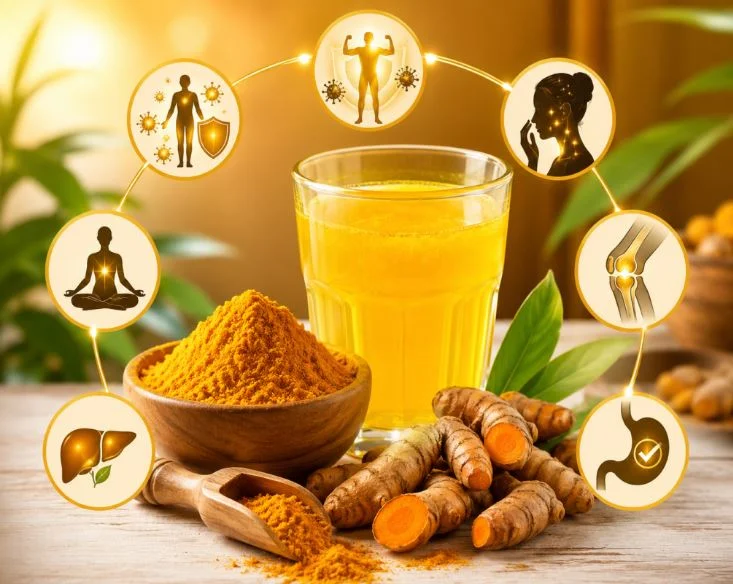
Is Haldi good for health? Discover turmeric benefits for immunity, digestion, heart health, skin, inflammation, and overall wellness in this guide.
The haldi spice comes from the rhizome of the Curcuma longa plant, which is part of the ginger family. It is then dried and powdered to create the yellow spice that we know so well. Turmeric gets its healthful properties from the main ingredient, curcumin, which is also where many of the health benefits of turmeric come from.
What is Haldi (Turmeric)?
Haldi is the name for Curcuma longa, a flowering plant belonging to the ginger family, which is native to parts of South and Southeast Asia. The rhizome of this plant – its underground stem – is dried and ground to produce a brilliant golden-yellow spice, commonly known as turmeric and widely used in Indian cuisine and Ayurvedic medicine.
There are more than 300 natural chemical substances in turmeric, but the most famous one is the curcumin component, together with two other curcuminoids, namely demethoxycurcumin and bisdemethoxycurcumin. These phenolic compounds are responsible for the color and taste of haldi and its medicinal benefits.
Haldi in Ayurveda: 4,000 years of traditional wisdom
Haldi in Ayurveda is considered a tridoshic herb due to its property of balancing all three doshas (Vata, Pitta, Kapha). It is used for treating illnesses, from problems of the liver to those of the respiratory system. The use of haldi as medicine has been explained in ancient texts such as the Sushruta Samhita (600 BC).
The ritual of rubbing the body of the bride or groom with a haldi paste before the wedding (the haldi ceremony) is more than just ritualistic; it makes use of the spice’s antibacterial and skin-lightening properties. Haldi doodh, on the other hand, has been drunk for years as an immunity drink.
Nutritional Profile of Haldi
Before discussing health benefits, it may be helpful to first learn about the nutritional composition of haldi. One teaspoon of ground turmeric (around 3 grams) contains the following:
- Calories: 9
- Carbohydrates: 2 g
- Fiber: 0.7 g
- Protein: 0.3 g
- Fat: 0.1 g
- Manganese: 26% of the Daily Value (DV)
- Iron: 9% of DV
- Potassium: 2% of DV
- Vitamin C: 2% of DV
- Curcumin: 60–100 mg (the key active compound)
Though the macronutrient value in turmeric may not be impressive, the presence of phytochemicals like curcumin, turmerones, and demethoxycurcumin makes it a functional food.
Key active compounds in haldi
| Compound | Category | Primary role |
| Curcumin | Curcuminoid polyphenol | Anti-inflammatory, antioxidant, neuroprotective |
| Demethoxycurcumin | Curcuminoid | Antioxidant, anti-tumor synergy |
| Bisdemethoxycurcumin | Curcuminoid | Immune modulation |
| ar-Turmerone | Sesquiterpene | Neuroregeneration enhances curcumin absorption |
| Turmerone | Volatile oil | Antimicrobial, anti-leishmanial |
| Zingiberene | Sesquiterpene | Digestive support, anti-nausea |
| Manganese, Iron, Potassium | Essential minerals | Enzyme function, oxygen transport |
Is Haldi Good for Health?
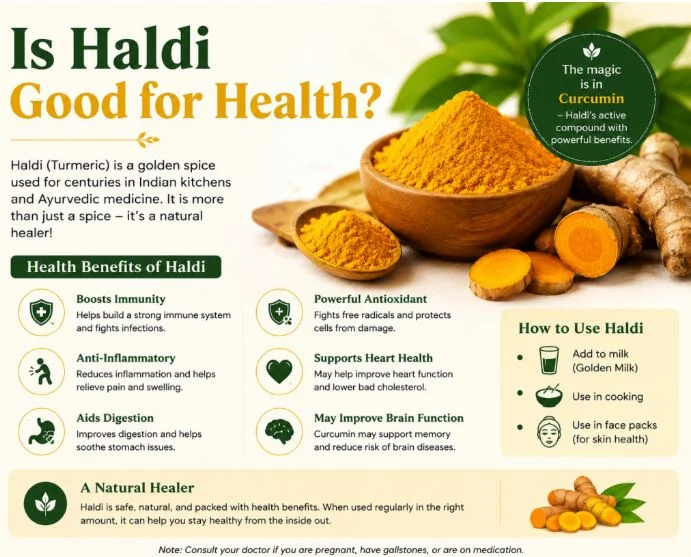
Yes, there is no doubt that haldi, or turmeric, is very good for your health because of the presence of a substance known as curcumin, which acts as an antioxidant and reduces inflammation. Turmeric helps you stay fit and improves the functioning of your immune system, heart, digestive system, joints, and even keeps your skin healthy.
Why Turmeric Water is Good for You?
Strengthens Immunity
The antioxidant and anti-inflammatory properties of curcumin are found in turmeric water. Consuming it regularly can help boost the body’s immune system and defenses.
Improves Digestion
Turmeric water could promote digestive function and aid in gut health. It may help reduce bloating, enhance digestion, and be helpful in providing overall digestive comfort.
Reduces Inflammation
Turmeric has been found to have anti-inflammatory properties because of the presence of curcumin. Turmeric water can also be beneficial for reducing chronic inflammation, promoting the health of your joints and body.
Promotes Heart Health
Turmeric water can be beneficial for the cardiovascular system, potentially due to its anti-inflammatory and antioxidant effects. Can help promote healthy blood flow and heart health.
Detoxifies the Body
Turmeric water can aid in cleansing the body of toxins. It has antioxidants that can help guard cells and support liver function.
Enhances Skin Health
Turmeric water may have anti-oxidative properties that protect the skin from damaging free radicals. Regular use can help maintain healthy and radiant skin.
Regulates Blood Sugar
By promoting blood sugar regulation, turmeric water can be a beneficial addition to a healthy lifestyle and diet, aiding in metabolic well-being.
Best Ways to Consume Haldi Daily
Golden Milk (Haldi Doodh)
Golden milk is an Ayurvedic beverage of warm milk, turmeric, black pepper, and honey. Drinking it in the evening could help the immune system, relaxation, sleep patterns, and joint comfort.
Curries & Dals
Haldi can be easily incorporated into curries and dals. Absorption of turmeric and its health benefits are enhanced when turmeric is cooked with oil, ghee, and black pepper.
Haldi Shots
Haldi shots are made of fresh turmeric root, ginger, lemon juice, and black pepper. This highly concentrated liquid is frequently taken in the morning to boost immunity, digestion, and reduce inflammation.
Curcumin Supplements
Curcumin supplements consist of concentrated turmeric extracts used for therapeutic effects. Piperine, BCM-95, or liposomal curcumin increases absorption and may provide greater health benefits than food sources.
Smoothies & Juices
Smoothies or juices: add half a teaspoon of haldi; they are convenient. Healthy fats, such as coconut milk, when used alongside turmeric, can help the absorption and effectiveness of the curcumin.
Haldi Paste (Topical)
The skin is frequently treated with the help of haldi paste combined with honey, yogurt, or rose water. It can help to calm inflammation, fade acne, heal wounds, and help to lighten the complexion.
Recommended intake: how much haldi per day?
There is no single universal recommended daily intake, but research and traditional practice converge on the following guidance:
| Purpose | Haldi powder | Curcumin supplement |
| General wellness / daily cooking | 1–3 g (½–1 tsp) | Not required |
| Anti-inflammatory support | 3–5 g | 500 mg standardized extract |
| Joint pain/arthritis | 5–8 g | 500–1,000 mg + piperine |
| Metabolic / blood sugar support | 3–5 g | 500–1,000 mg |
| Topical (skin) | As needed in paste | N/A |
Potential side effects and precautions
Haldi is very harmless when taken in food quantities. But doses higher than 8 grams per day can cause gastrointestinal upset, nausea, or diarrhea in susceptible people. In certain populations, there are certain precautions to take:
- Pregnant women: While culinary amounts are harmless, higher dosages can cause uterine muscle contraction and must be avoided by pregnant women.
- People on anticoagulants: The turmeric plant is slightly blood-thinning in nature. Large amounts, along with warfarin and aspirin, might lead to increased risks of bleeding.
- Gallbladder conditions: Turmeric promotes bile production. It helps the body digest food better, yet causes discomfort in individuals suffering from gallstones and bile duct blockage.
- Iron deficiency: Large amounts of turmeric can hinder iron absorption from food sources. Individuals suffering from iron deficiency anemia must watch their dietary intake of turmeric.
How to Use Haldi in Your Daily Diet
Turmeric can be added to foods in a variety of easy ways:
Add It to Curries
Turmeric is a popular curry spice that adds flavor, aroma, and color. A little added to vegetable, meat, or lentil curries adds nutritional value.
Drink Turmeric Tea
Turmeric tea is warm and soothing, rich in antioxidants, and beneficial for the whole body. Drinking a cup each day can aid digestion and immunity.
Mix It Into Smoothies
Add a bit of turmeric to fruit or vegetable juices for an instant nutrient punch. Compliments mango, banana, pineapple, and ginger.
Prepare Golden Milk
Golden milk is a blend of turmeric and warm milk, also including some spices. This soothing beverage can help promote relaxation, immunity, and recovery, and provide a fun taste.
Use It in Soups
Turmeric is a great addition to soups and broths, and it adds flavor and nutritional value to food. Great in vegetable, lentil, and chicken soups as a supplement for good health.
Make Turmeric Water
Create a health drink: combine turmeric powder with warm water. Regularly drinking turmeric water can assist with digestion, hydration, and overall well-being.
Who Can Benefit from Haldi?
The use of haldi can be beneficial for most healthy people. It can help improve immune function, digestion, heart health, and joint function. People who are looking to use natural antioxidants and anti-inflammatory agents use turmeric in their diet.
Common Myths About Haldi
Myth 1: Turmeric Cures Every Disease
Turmeric has numerous potential health benefits, but it does not cure every disease. It can aid well-being but should not be a substitute for a qualified health care practitioner’s evidence-based health recommendations or prescription medication.
Myth 2: More Turmeric Means Better Results
Taking too much turmeric does not always result in more health gains. In fact, taking an excessively large amount can cause problems like digestive difficulties. Moderation is usually the key to obtaining maximum results from this herb.
Myth 3: Turmeric Works Instantly
Turmeric is not a temporary fix. For any health benefits to be seen, one should use turmeric consistently over a period of time. Consistent use of turmeric, in combination with good food habits and a proper lifestyle, can bring many health benefits.
FAQs
Can I take haldi every day?
Yes, it is safe, beneficial, and recommended to have haldi daily in culinary doses of 1-3 g. It has been used for generations by billions of people in South Asia without any ill effects.
Does haldi reduce belly fat?
Curcumin can inhibit the growth of fat tissue and decrease insulin resistance and inflammation that characterize metabolic syndrome. Though it is not the sole answer to the problem of obesity, curcumin helps in the process of fat breakdown when paired with a healthy diet and regular physical activity.
Is haldi good for the liver?
Yes. Curcumin has hepatoprotective (liver-protective) properties. It helps to decrease liver inflammation, aids bile flow, and studies indicate it could slow the advancement of non-alcoholic fatty liver disease (NAFLD).
Conclusion
Haldi is an extremely effective spice that provides various health advantages, courtesy of curcumin, which is present in haldi. It helps to boost one’s immune system, improves digestion, strengthens the heart, keeps joints healthy, and even promotes skin health. If turmeric is taken as part of one’s healthy diet, it will be beneficial for good health.


Pingback: Medical News Today Review: Health News You Can Trust - Mtech content