
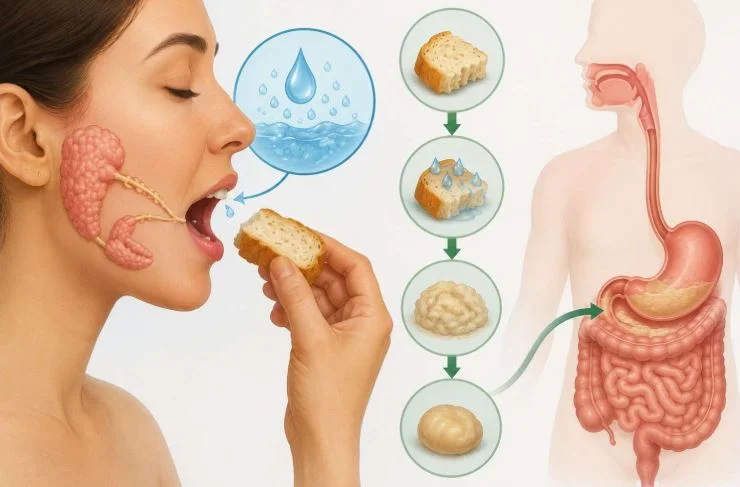
Digestion is something that begins way before the food gets to the stomach. Digestion actually commences in the mouth, and saliva is one of the most important elements that play a key role in digesting food. Saliva is often considered to be of secondary importance, but it is actually an extremely crucial digestive secretion, and without it, food cannot be processed in the right manner.
What Is Saliva?
Saliva is a clear fluid that is produced by three main pairs of salivary glands and by many small salivary glands in the mouth. The average person releases 1–1.5 liters of saliva per day.
Saliva is composed of:
- Water (about 99%)
- Digestive enzymes
- Mucus
- Electrolytes
- Antibacterial compounds
- Proteins and minerals
All these combine to help in the digestion process and fight bad bacteria in the mouth.
What Is Role of Saliva in Digestion of Food?
The function of saliva in the digestion of food begins once food is placed in the mouth. Saliva gets food ready for digestion by making food soft, breaking it down chemically, and helping it to be swallowed. This makes it clear how important the contribution of saliva is, and therefore why chewing is vital.
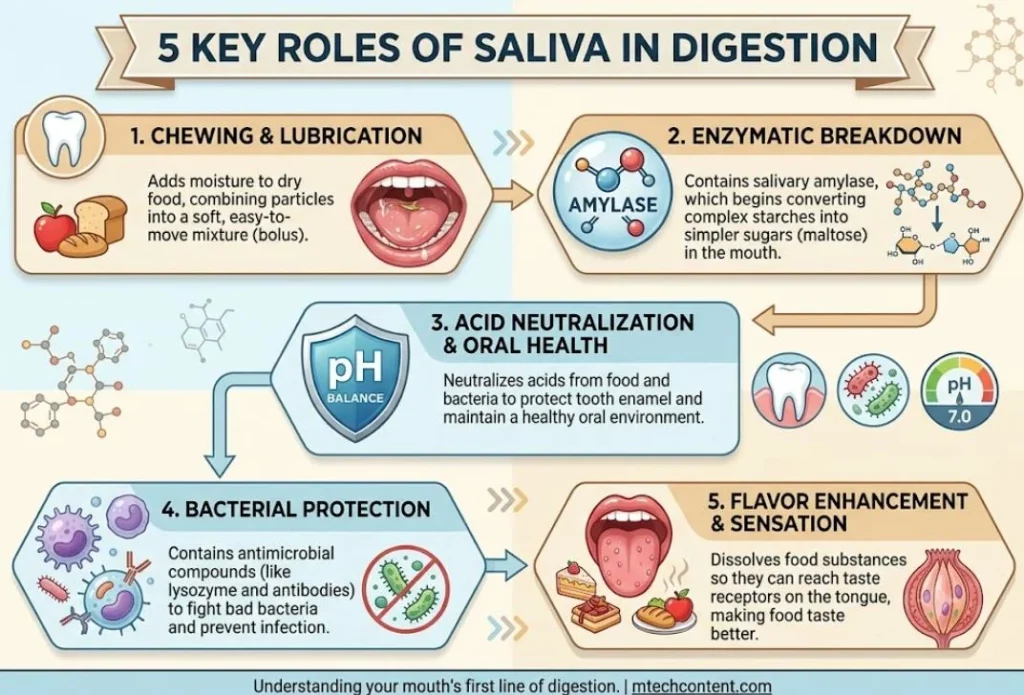
| Saliva Function | Role in the Digestive Process | Benefits for the Body |
| Food Moistening | Adds moisture to dry food and combines particles into a softer mixture for easier movement. | Allows comfortable chewing and smooth swallowing into the digestive tract. |
| Carbohydrate Breakdown | Contains salivary amylase enzymes that begin converting starches into simpler sugar molecules. | Starts digestion of carbohydrates before food reaches the stomach. |
| Flavor Enhancement | Helps dissolve food substances so that taste receptors on the tongue can recognize flavors. | Improves taste sensation and supports appetite during eating. |
| Mouth Lubrication | Produces mucus that coats food and reduces friction while chewing and swallowing. | Makes food movement easier and protects oral tissues from irritation. |
| Acid Neutralization | Maintains a balanced pH level by reducing acids produced by foods and bacteria. | Helps protect tooth enamel and supports a healthy mouth environment. |
| Bacterial Protection | Contains antimicrobial substances that control harmful microorganisms inside the mouth. | Reduces infection risks and maintains better oral health during digestion. |
How Saliva Breaks Down Food: Step by Step
Sensory Trigger
Salivary Glands Stimulate Saliva When They See, Smell, Taste, Or Think About Food. This early reaction gets the mouth and digestive system ready for food to be chewed and swallowed efficiently.
Moistening and Lubrication
Saliva combines with food as it is chewed, softening hard bits and lubricating food. This facilitates chewability, decreases irritation, and aids in the mouth propulsion of food.
Enzymatic Starch Breakdown
The enzyme salivary amylase is present in saliva, which starts to break down starches into simpler sugars. This begins the process of digestion of carbohydrates in the mouth, prior to the stomach and intestines.
Bolus Formation
When chewing food, saliva creates a soft, cohesive mass known as a bolus. The bolus is less likely to cause choking and bolus obstruction.
Oral pH Buffering
Saliva helps to keep the mouth’s pH in balance by counteracting the acids it creates, which are formed by bacteria or foods. This will safeguard the teeth from decay and ensure a healthy environment in the mouth.
Antimicrobial Defence
Saliva contains antibacterial and antiviral substances that help to control harmful microorganisms. These compounds have protective effects, which help to prevent infections, maintain oral health, and contribute to good digestive health.
Key Components of Saliva
Salivary Amylase
Salivary amylase is an enzyme secreted in saliva that starts to break down carbohydrates. It breaks down complex starches to simpler sugars, beginning the digestion process in the mouth.
Mucus
Mucous substance present in saliva, which softens and lubricates food. It helps the chewed food to merge into a smooth bolus, facilitates swallowing, and prevents the friction of food in the mouth.
Electrolytes
Saliva contains various electrolytes (such as sodium, potassium, calcium, and phosphate), which help keep the mouth at a neutral pH. They also aid in maintaining a strong tooth and its enzyme activity during digestion, as well as overall oral health.
Antibacterial Compounds
Saliva contains antibodies like lysozyme and immunoglobulins, which are useful in combating harmful microorganisms. These compounds help to ward off infections, inhibit the growth of bacteria, and keep the environment healthy for the digestive system.
How Does Saliva Help in Digestion?
1. Begins the Digestion of Carbohydrates
The most important digestive function of saliva is starting the breakdown of carbohydrates. An enzyme called salivary amylase is present in the saliva that starts the process of breaking down complex carbohydrates, such as starch, to simpler ones like maltose.
For instance, in the case of bread, rice, or any other starchy food, chewing at the start of the digestion of the food initiates the process of breaking down starch molecules into smaller ones, which are then further broken down by the digestive system.
Carbohydrate digestion is still going on in the small intestine, but it actually started in the mouth due to the action of saliva.
2. Moistens and Softens Food
Saliva makes dry food palatable to chew and swallow. Otherwise, food would get stuck and remain dry in the mouth.
Slurry in the saliva sticks food particles together to make a soft mass called a bolus. This bolus may go down the oesophagus and into the stomach with ease.
3. Helps in Chewing and Swallowing
Chewing physically reduces food into smaller parts, and more surface area is exposed for digestion. Saliva aids this by helping food to flow and helping the tongue roll food in the mouth.
If food is mixed with the saliva correctly, it will be easier and safer to swallow, as the food can pass through the digestive system with ease.
4. Starts the Breakdown of Fats
Saliva primarily contains an enzyme called amylase for breaking down carbohydrates, but also has a little of an enzyme called lingual lipase. The enzyme secreted in the mouth starts the digestion of fats and is more active in the stomach later.
This early breakdown of the fats is particularly important for babies and young children, who are still developing their digestive systems.
5. Helps Maintain Mouth Health
Saliva serves more functions than it helps with digestion. Also protects against damaging bacteria in the mouth. It may also have antibacterial properties that inhibit the proliferation of microorganisms and thus the onset of infection.
Saliva also helps to neutralize the acids that form from bacteria, which decreases the likelihood of tooth decay and keeps the mouth healthy.
6. Improves Taste Perception
Saliva plays an important role in the sense of taste. The taste receptors on the tongue do not react to food chemicals until the chemicals are soluble in the saliva.
When there is a lack of saliva, food may not taste as good since taste molecules are unable to reach the taste buds.
Why Saliva Is Important for Digestion
Saliva is a key element in digestion as the secretions initiate digestion in the mouth before entering the stomach. It lubricates the food and contributes to its formation into a bolus to swallow it; it also has enzymes to break down carbohydrates. Saliva also provides assistance to the sense of taste, helps protect oral tissues, regulates pH, and inhibits the proliferation of harmful bacteria.
Factors That Influence Saliva Production:
Hydration
Drinking enough water is important to maintain saliva production. Dry mouth occurs as a result of dehydration, which decreases saliva production and makes chewing, swallowing, and digestion more difficult.
Stress
The activity of the salivary glands can be altered by stress and anxiety, which can lead to less saliva production. Emotional stress can lead to dry mouth and lead to problems with comfortable eating and digestion.
Medications
Some medicines, such as antihistamines and antidepressants, may cause less saliva as a side effect. Dry mouth can cause problems with swallowing and cause mouth discomfort.
Circadian Rhythm Disruption
Alterations in sleep patterns and biological rhythms may affect salivation. Sleep hygiene can have an impact on digestive and oral function and may decrease saliva production.
What Happens If There Is Not Enough Saliva?
Dry mouth (xerostomia) is a condition in which the body makes less saliva than normal. This may make chewing and swallowing harder and could decrease the effectiveness of digestion.
Some consequences of dehydration of saliva are:
- Difficulty swallowing food
- Reduced sense of taste
- Increased risk of tooth decay
- Mouth discomfort
- Problems with speech
- Poor digestion of carbohydrates in the mouth
Healthy saliva amounts can be maintained by drinking plenty of water, maintaining oral hygiene, and avoiding anything that decreases saliva production.
Importance of Chewing and Saliva in Digestion
Chewing helps to get the food thoroughly mixed with the saliva so that it will digest effectively. Rushing eating can cause a person to not mix the food with saliva enough to swallow, which can be difficult and can also decrease initial nutrient breakdown.
Slow chewing allows enzymes in saliva to work slowly and start changes to the food, and prepares it for digestion in the stomach.
FAQs
Does saliva digest all types of food?
No, digestion of carbohydrates starts with saliva. It is not very useful for digesting fats and proteins. The stomach and small intestine are responsible for most of the digestion of protein and fat.
Does saliva help in tasting food?
Yes, saliva functions in taste by breaking down food chemicals so that the taste receptors on the tongue can detect the various food tastes. If there’s insufficient saliva, you might not taste food quite as well.
Is saliva only useful for digestion?
No, saliva serves a variety of purposes besides digestion. It promotes oral health, safeguards teeth and tissues, regulates bacteria, aids speech, and enhances taste.
Final Thought
Saliva is an important component of the digestive system and starts the process of digesting food as soon as it enters the mouth. It moistens food, activates enzymes, assists in swallowing, enhances the taste, and maintains oral health. Proper hydration and a healthy production of saliva help maintain efficiency in digestion and promote overall health.