
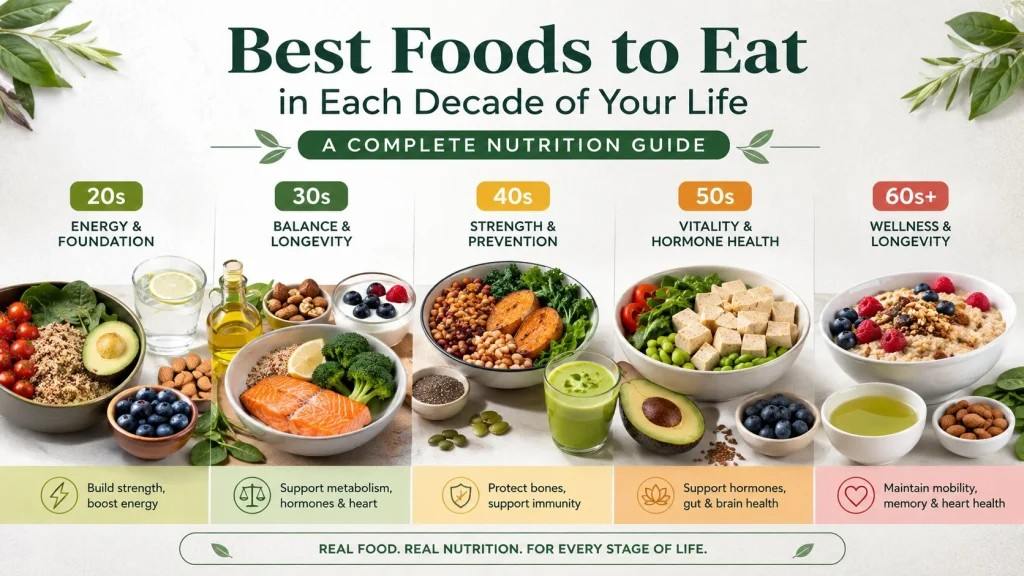
Discover the best foods to eat in each decade of life. Learn age-based nutrition tips to support energy, muscle strength, healthy aging, and longevity.
Food you should eat is food that supplies your body with necessary nutrients like vitamins, minerals, protein, fiber, and energy. Nutritious foods include fresh fruits, fresh vegetables, whole grains, meat, dairy, and healthy oils. Eating nutritious foods allows you to stay healthy, maintain a healthy weight, enhance digestion, boost the immune system, and avoid developing diseases from an unhealthy lifestyle.
Why Your Diet Should Change as You Age
Various biological changes take place at each stage of life in your body. You might have a reduced metabolic rate, muscle weakness, and nutritional requirements that change. Some of the changes associated with aging include:
- Weakening muscles and poor muscle recovery
- Low bone density
- Changes in hormone levels
- Slow digestion
- Increased likelihood of developing diseases
- Poor nutrient absorption
Choosing the right foods at the right age is essential for proper body adjustment and better health in the long run.
Best Foods to Eat in Each Decade of Your Life
In Your 20s and 30s
1. Lean Protein
Lean protein, such as chicken, fish, eggs, beans, and legumes, is important in building muscle, supporting metabolism, repairing tissues, and maintaining energy throughout the active years of life.
2. Complex Carbohydrates
Whole grains, oats, brown rice, and vegetables are sources of complex carbohydrates, which release energy slowly, aid digestion, aid brain function, and help stabilize blood sugar levels during hectic days.
3. Low-Fat Dairy
In early adulthood, low-fat dairy foods like milk, yogurt, and cheese contain calcium, vitamin D, and protein to support strong bones, healthy muscles, and overall nutrition. According to dentists, calcium is important for teeth.
4. Iron
Foods that are rich in iron, such as lean meat, spinach, lentils, and beans, help transport oxygen, ward off fatigue, and keep energy levels healthy, particularly for those who require more iron, as they do during pregnancy.
5. Foods With Folic Acid
Folate foods like leafy greens, beans, citrus fruits, and fortified grains are important for cell growth, DNA synthesis, and well-being during the reproductive years.
In Your 40s and 50s
1. Fermented Foods
Fermented foods such as yogurt, kefir, kimchi, and sauerkraut are rich in probiotics that are great for digestive health, balance the digestive system, and boost the immune system with age.
2. Fruits and Vegetables
Bright fruits and veggies also include antioxidants, vitamins, minerals, and fiber, which help to reduce inflammation, support heart health, aid digestion, and prevent damage to cells caused by aging.
3. Soy Products
During middle adulthood, soy foods like tofu, tempeh, and soy milk can be a good source of plant-based protein and other compounds that may help with heart health, hormone balance, and healthy aging.
4. Whole Grains and Fibrous Vegetables
Whole grains and fibre-rich vegetables aid digestion and help keep cholesterol levels in check, manage blood glucose, and are a good source of nutrients to keep you well and full of energy.
5. Spices
Turmeric, cinnamon, ginger, garlic, and other spices have a tendency to contain compounds found naturally in the plant that can help lessen inflammation, boost antioxidant protection, and provide healthy flavor without the excess salt or calories.
6. Lean Proteins
Lean proteins are important for maintaining muscle mass, aiding in metabolism, and keeping your muscles strong throughout your 40s and 50s. Fish, poultry, eggs, beans, and lentils are good choices.
7. Low-Fat Dairy
As natural aging processes start to occur, low-fat dairy products contain good protein, calcium, and vitamin D to help maintain bone strength and muscle health.
In Your 60s, 70s, and Beyond
1. Eggs
Eggs are a good source of protein, vitamins, and minerals, including choline, that are essential to older adults for maintaining muscle, supporting brain function, and helping with overall nutrition.
2. Olive Oil, Fatty Fish, and Walnuts
Healthy fats and omega-3 fatty acids found in olive oil, fatty fish, and walnuts are beneficial for the heart and brain and help lower inflammation, which is the root of aging.
3. Berries and Melons
The antioxidants, vitamins, and water in berries and melons help keep cells healthy, aid digestion, promote immunity, and are essential for healthy aging.
4. Low-Fat Dairy
Low-fat dairy products provide calcium, protein, and vitamin D, which help keep bones strong and healthy and help prevent nutrient deficiencies in older adults.
5. Lean Proteins
Lean protein (fish, eggs, poultry, and legumes) prevents muscle loss and helps to keep people physically strong, improve recovery, and help people stay independent as they age.
Foods That Benefit You at Every Age
Leafy Green Vegetables
Foods such as leafy green vegetables like spinach, kale, and broccoli are rich in vitamins, minerals, and antioxidants. They help promote healthy aging, boost immunity, guard cells, and promote overall wellness.
Nuts and Seeds
Nuts and seeds like walnuts, almonds, and chia seeds provide healthy fats, plant-based protein, and minerals vital to heart health, brain function, energy levels, and healthy aging.
Fish
Fish is a source of omega-3 fatty acids, which are a crucial part of the diet at various ages and stages of life to promote heart health, brain function, maintain muscle health, and reduce inflammation.
Legumes
Lentils, chickpeas, and beans are a great source of fibre and plant protein. They aid in digestion, blood sugar control, and prolonged energy.
Foods to Limit as You Age
As your body changes throughout the years, eating less of some foods may be beneficial to your health. Reducing the intake of processed foods, added sugars, and too much alcohol can help with metabolism and enhance overall well-being.
Highly Processed Foods
Packaged snacks, fast food, and processed foods frequently have high levels of sodium, unhealthy fats, and added sugars, which can hurt long-term health.
Excess Added Sugar
Consuming excessive amounts of added sugar can lead to weight gain, blood sugar issues, inflammation, and mood swings. Limiting foods high in sugar promotes metabolic health.
Excess Alcohol
Too much alcohol can have a bad impact on sleep and metabolism, liver function, and absorption of nutrients. Moderation will help to maintain an overall healthy lifestyle and healthy aging.
How to Create an Age-Friendly Healthy Diet
The basis of a balanced age-friendly diet is to choose nutrient-rich foods to get the necessary nutrients. A diet of vegetables, protein, whole grains, and healthful fats promotes energy and longevity.
Half Your Plate: Fruits and Vegetables
Half of your plate should be filled with fruits and vegetables, which are packed with vitamins, minerals, fibre, and antioxidants that help keep your body healthy, strong, and fighting illness.
One Quarter: Protein
Protein is important for helping to strengthen muscles, repair and recover them, and maintain physical function at any age, so a quarter of your plate should be protein.
One Quarter: Whole Grains
Whole grains, such as oats, brown rice, and quinoa, offer a steady energy release, dietary fiber, heart-supporting nutrients, and help maintain a stable blood glucose level.
Add Healthy Fats
Add healthy fats such as nuts, seeds, olive oil, and fish to promote brain health, good health for the heart and blood vessels, hormones, and absorption of fat-soluble vitamins.
1. Drink Enough Water
Proper hydration helps with digestion, circulation, temperature control, and energy. As the body’s thirst mechanism may decrease with age, it becomes even more important to drink enough water.
2. Stay Physically Active
Exercise and good nutrition keep muscles strong, bones healthy, flexible, and active at various stages of life, and promote independence.
3. Prioritize Sleep
Good sleep enhances immunity, hormone regulation, psychological well-being, and recovery. A good night’s sleep contributes to healthy living and a well-functioning body.
4. Maintain Regular Meal Patterns
Consuming balanced meals at regular intervals helps maintain a steady energy level, aids in digestion, prevents overeating, and provides the body with necessary nutrients throughout the day.

FAQs
Does protein become more important with age?
Yes. Protein becomes more important as people grow older since protein is essential for maintaining strength in muscles and for tissue repair.
Which foods help slow aging?
Foods high in antioxidants, fatty acids, vitamins, and minerals could be beneficial for aging. These foods include berries, green vegetables, nuts, fish, and vegetables of many colors.
Should your diet change every decade?
Yes. You need different levels of calories, have a different metabolic rate, different muscle mass, and different requirements for nutrients. Your diet should evolve to match all that.
Final Thought
Eating appropriate foods in all decades of one’s life allows your body to adjust to the aging process while staying strong and well. Protein-rich foods during your younger years and nutritious foods in your senior years support healthy aging. A diet based on whole foods, proper hydration, and mindful food consumption may increase your lifespan and overall quality of life.

Pingback: What Are the Five Food Groups? A Complete Guide - Mtech content
Pingback: Are Mushrooms Good for Health? 7 Benefits and Facts - Mtech content