Learn about the five food groups, their importance, and how fruits, vegetables, grains, proteins, and dairy contribute to a healthy, balanced diet.
What are the five food groups?
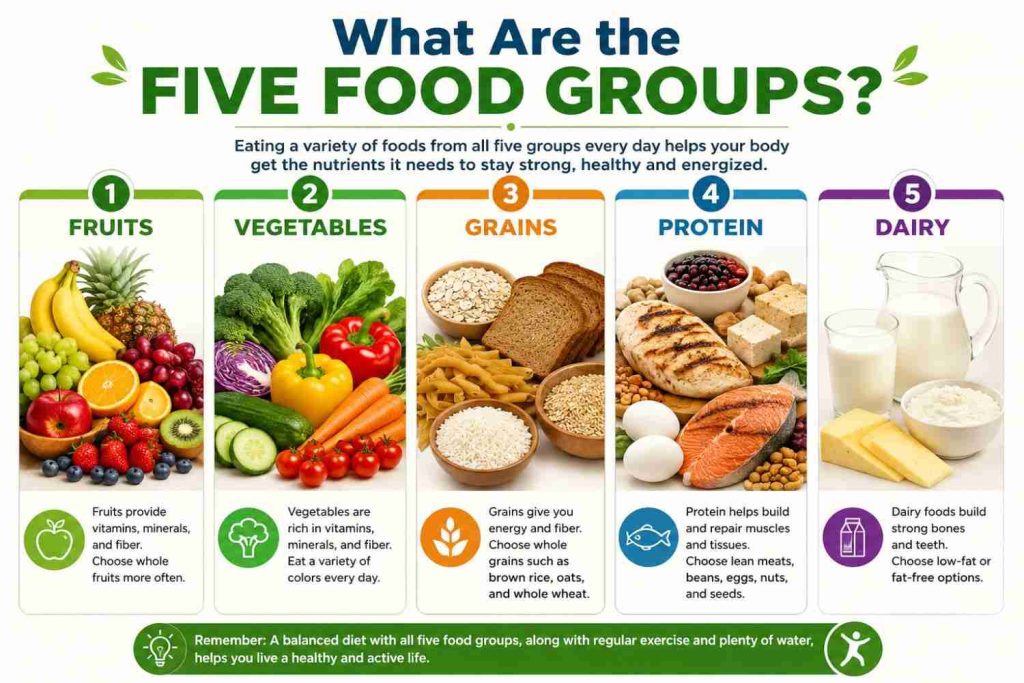
The five food groups comprise fruits, grains, protein, and Dairy. All five basic food groups combined provide the body with important nutrients such as vitamins, minerals, dietary fiber, healthy fats, and protein, which are required daily. The consumption of all five food groups in appropriate proportions forms the base of a balanced diet.
Why Understanding Food Groups Matters
All the major national food guidelines, including USDA’s MyPlate model, divide food into five basic food groups. Knowledge of food group classification enables individuals to plan their meals, meet their daily nutrient requirements, and avoid the trap of consuming an excess of one food group while forgetting the rest.
Food groups not only matter to dietitians but are also necessary for parents in making plans for meals; students learn about food groups in their health courses, and people who wish to change their eating behavior would benefit from learning about food groups because they help improve their overall diet. The significance of food groups in one sentence is as follows: there is no food group that contains all nutrients necessary for your body; therefore, you should consume all five of them.
The Five Food Groups at a Glance
| Food Group | Common Foods | Key Nutrients |
| Fruits | Apples, bananas, oranges, berries | Vitamins, minerals, fiber |
| Vegetables | Spinach, carrots, broccoli, peppers | Vitamins, minerals, fiber |
| Grains | Oats, rice, bread, pasta | Carbohydrates, fiber, B vitamins |
| Protein | Eggs, beans, fish, meat, nuts | Protein, iron, zinc |
| Dairy | Milk, yogurt, cheese | Calcium, protein, vitamin D |
The food group examples above clearly indicate the need for a varied diet because of the importance of food groups. The significance of food groups comes from the kind of nutrients contained in each of the food groups.

1. Fruits and Vegetables
The category of fruits and vegetables is very important when it comes to healthy eating practices. Some of the nutrients that belong to the fruits and vegetables category include vitamins, minerals, antioxidants, fiber, and water. Examples of foods are apples, oranges, bananas, berries, spinach, broccoli, carrots, tomatoes, and peppers.
Why Are Fruits and Vegetables Important?
Fruits and vegetables will provide the body with the nutrients that are needed in the body. Fiber is also essential when it comes to digestion and helps one feel full after eating a meal.
Make sure you have foods with various colors. Green leafy vegetables, orange vegetables, berries, and many other colored fruits and vegetables provide different types of nutrients.
Fruits and vegetables, which are fresh, frozen, dried, or canned, are part of a healthy dietary pattern. Fruits and vegetables that are canned need nutrition labeling, because otherwise you will take in too much sugar and sodium.
2. Grains
The grains group comprises foods that are prepared using grains like wheat, rice, oats, barley, corn, and other grains. Such foods include bread, pasta, rice, oatmeal, breakfast cereals, tortillas, and crackers.
Grains offer carbohydrates, which serve as an important energy source. Grains may also offer fiber, vitamins, and minerals.
3. Protein Foods
The protein food group comprises foods that contain proteins as well as other nutrients that help in the development and maintenance of tissues. The foods contained in this category include meat, poultry, fish, shellfish, eggs, legumes, nuts, and seeds.
Healthy Protein Choices
Sources of different proteins include:
- Chicken and Turkey
- Eggs
- Fish and Seafood
- Legumes (such as beans and lentils)
- Nuts and Seeds
- Lean meats
- Tofu and other plant-based proteins
Lean proteins may be essential when forming nutritious diets. Although fish and seafood provide healthy fats, legumes can give proteins and fiber. In terms of consumption, meats and poultry must be lean, and one should grill, roast, bake, or steam them.
4. Dairy
Foods belonging to the dairy food group include foods such as milk, cheese, yogurt, and dairy products that have been fortified with nutrients. The foods may provide calcium and protein, among other nutrients. Generally, dairy products are well known for providing calcium. Calcium is essential in maintaining healthy bones and teeth.
Calcium-Rich Foods
Calcium food examples include:
- Milk
- Yogurt
- Cheese
- Fortified plant-based milk
- Some fortified foods
Everyone does not consume dairy foods; thus, there are fortified options that people can take to ensure they meet their nutritional needs.
How the Five Food Groups Work Together
Five food groups in practice means that there is no need for any one of the groups to supply all nutrients your body needs. A well-balanced diet would include:
- Vegetables providing fiber, vitamins, and minerals
- Whole grains for providing carbohydrates and fiber
- Protein foods supplying protein and minerals
- Dairy or equivalent products for supplying protein and calcium
- Fruits as another source of vitamins, minerals, and fiber
This way, it is much easier to prepare well-balanced diets without excluding any food types at all.
Example of a Balanced Meal
| Meal Component | Example | Main Contribution |
| Vegetables | Broccoli and carrots | Fiber, vitamins, minerals |
| Grain | Brown rice | Carbohydrates, fiber |
| Protein | Grilled chicken | Protein, iron |
| Dairy | Plain yogurt | Calcium, protein |
| Fruit | Berries | Fiber, vitamins |
A diversity of foods, not perfection, is the key. Your recommended food consumption is based on certain considerations like age, activity, nutritional needs, etc.
Why Are the Five Food Groups Important?
The significance of food groups is because of their ability to offer a wide variety of nutrients. Consuming foods from different groups helps one easily get nutrients.
Foods from the protein group provide amino acids; foods from the grains group provide carbohydrates and fiber. Foods from the fruits and vegetables group provide vitamins and minerals.
Dairy foods may provide calcium and protein. Nuts and seeds, fish, and other foods may provide healthy fats. Foods from different groups can help identify healthy foods that should be included in the diet.
How Many Foods Should You Eat From Each Group?
There is no universal amount of anything for all people. Portion amounts and daily needs will vary from person to person. Do not worry about precise amounts of food. Focus on eating varied, nutrient-rich foods. Eat a balance of foods from all food groups. Avoid focusing on only one food group. A good strategy for daily food groups would be:
- Adding fruits or veggies in meals and snacks.
- Choosing whole grains on a regular basis.
- Incorporating proteins with main meals.
- Including dairy products or alternatives when needed.
- Choosing healthy fat-containing foods in moderation.
This approach supports healthy meal planning and makes it easier to meet daily nutritional needs.
Food Groups and Healthy Meal Planning
Meal planning does not have to be very difficult when it comes to healthy meals. Simply pick out one food from different food groups to form a meal.
If it is breakfast, the meal can comprise oatmeal with fruits and yogurt. For lunch, it could be bread with protein and vegetables.
For dinner, one may opt for brown rice, fish, and mixed veggies. In addition, snacks could be varied in their types as well. Fruit and yogurt, veggies with hummus, or even some nuts can serve as good nutrition-rich foods.
Do not forget that portion size counts. Healthy eating is not only about consuming more healthy foods but also about choosing correct portions according to your daily needs.

What Foods Belong to Each Food Group?
Being aware of foods in each category can make grocery shopping and cooking easier.
| Category | Foods in Each Group | Nutritional Highlights |
| Fruits | Apples, berries, bananas, oranges | Fiber, vitamins, minerals |
| Vegetables | Spinach, broccoli, carrots, peppers | Fiber, vitamins, minerals |
| Grains | Oats, rice, bread, pasta, barley | Energy, fiber, B vitamins |
| Protein | Eggs, beans, fish, poultry, nuts | Protein, iron, zinc |
| Dairy | Milk, yogurt, cheese | Calcium, protein |
The above categories of food groups may act as a basic framework when grocery shopping. Having different foods can help one create diverse dishes.
Recommended Portion Sizes for Balanced Meals
| Food Group | Suggested Daily Portion (Adults) | Practical Example |
| Fruits & Vegetables | 5–9 servings | 1 medium fruit + 2 cups leafy greens |
| Grains | 6–8 servings (half whole grains) | 1 cup cooked rice or 2 slices of bread |
| Protein | 2–3 servings (about 5–6 oz total) | 1 palm-sized portion of fish or poultry |
| Dairy | 2–3 servings | 1 cup milk + 1 slice cheese |
| Healthy Fats | Used sparingly | 1–2 tbsp olive oil |
Building Balanced Meals with Nutrient-Rich Foods
A balanced diet is not something that equates to taking an even measure from all food groups; it’s more about balance and variety. A healthy plate will usually contain:
- Fruits and vegetables, which take half the plate
- Whole grains occupying one-quarter of the plate
- Lean meat occupying the other quarter of the plate
- Dairy on the side or a substitute for it
- Healthy oils for cooking and dressing
The Importance of Food Groups in Long-Term Health
The intake of balanced amounts of foods within all the food groups decreases the chances of getting heart disease, type 2 diabetes, and certain types of cancer. Foods from different food groups contain nutrients that work together. Fiber in vegetables helps slow sugar absorption. Protein supports muscle strength. Calcium helps maintain strong bones. Fats support healthy brain function. Not having any of the food groups will lead to deficiencies that cannot be compensated for through supplements.
Conclusion
The knowledge of the five food groups will make healthy eating easy for you. Fruits, vegetables, grains, protein foods, and dairy products all contain essential nutrients that help the body get energy and nutrients for growth and digestion. By choosing a lot of nutritious foods, paying attention to portions, and using different kinds of foods in meals, you can form good eating habits.