Do exercises help scoliosis? Learn the benefits, safe exercises, pain-relief movements, exercises to avoid, and how physical therapy supports scoliosis management.
What Is Scoliosis?
Scoliosis is a side-to-side curvature of the spine that is greater than 10 degrees on an X-ray. The curvature is measured using Cobb’s Angle. There is usually a rotation in the spine, causing one shoulder blade, rib, or hip to be higher than the other.
Scoliosis is found in about 2-3 percent of the population. The most common form, AIS, occurs between the ages of 10-18 years, and the cause is not yet identified. Degenerative scoliosis may occur in adults due to the wearing out of spinal discs and joints with aging.
Common signs of scoliosis
- Uneven shoulders or shoulder blades
- One hip being higher or more prominent
- Rib prominence while leaning forward
- Clothing hanging asymmetrically
- Back pain or fatigue, particularly among adults
Do Exercises Help Scoliosis?
Yes, exercise can help individuals with scoliosis enhance their strength, flexibility, balance, posture, mobility, and overall fitness. Exercise might also help with managing some back pain. Nonetheless, exercise does not ensure the straightening of a structural spinal curve. A professional physiotherapist can recommend exercises depending on the type of spinal curve and an individual’s physical capabilities.
Exercises for Scoliosis to Do at Home or in the Gym
Those suffering from scoliosis can exercise at home or even in the gym to increase their strength, flexibility, balance, and mobility. While exercising, one should always ensure the use of controlled movement and correct resistance, without activities that increase pain.
1. Diagonal Plank
For scoliosis, diagonal plank exercises involve the strengthening of the core, shoulder, hip, and trunk muscles. These exercises require the maintenance of controlled movement, especially twisting. One is supposed to begin with the easy version and progress gradually based on his/her strength and balance.
2. Clock Exercise
The clock exercise is used to increase pelvic awareness and controlled movement. Standing upright with feet firmly on the ground, imagine your pelvis to be in the center of the clock and move through various positions comfortably.
3. Half-Squats
With half-squat exercises, the thighs, hips, and other supporting muscles are strengthened by performing movements involving a smaller range than the full squat. The knees need to be kept straight and in line with the feet during the exercise.
4. Mountain Climber Exercise
Mountain climbers also work out the core, shoulder, hip, and leg muscles. However, mountain climbers involve the coordination of these parts of the body. One needs to begin slowly and maintain control in position.
5. Lower Body Stretches With a Chair
Stretching for the lower body using a chair will increase flexibility in the hips, legs, and calves, while providing balance. Do the stretching slowly, avoiding any bouncing, forcing the muscles to move, or causing pain in the spine or joint areas.
Scoliosis Exercises for Pain Relief
Exercises for scoliosis patients can be beneficial to ease their pain by making the muscles strong and flexible and improving body awareness and movement. Exercises should not become painful and should be done gradually. If there is any persisting pain, it should be evaluated.
Arm/Leg Raises
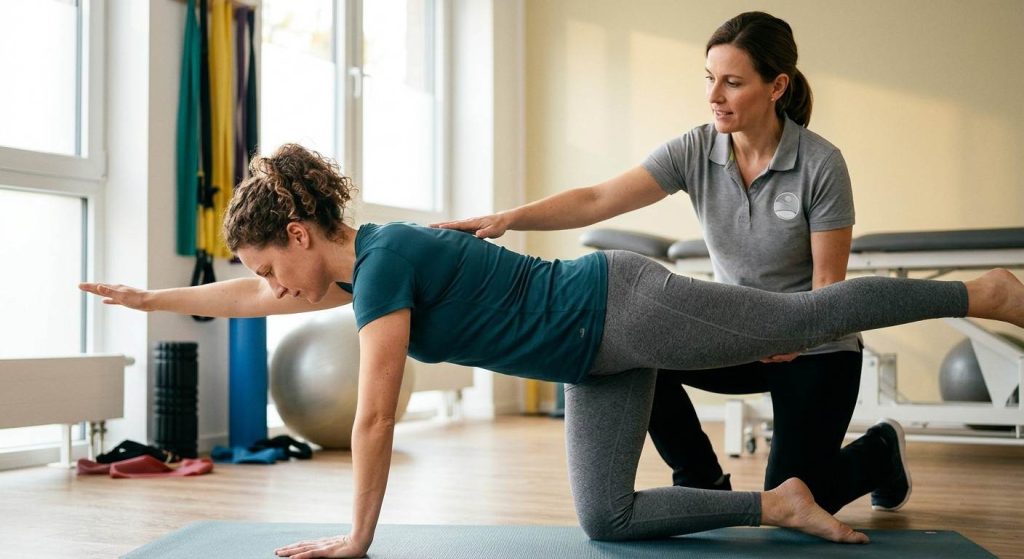
Arm and leg lifts build core strength while enhancing balance and coordination. Position yourself on your hands and knees, keep controlled spinal positioning, and raise each limb at a time before moving on to opposite arm and leg movements.
Cat/Cow
Cat/Cow gives you a chance for controlled spinal movement through flexion and extension. Go from comfortable positions slowly while keeping controlled breathing. Do not force your range of movement, particularly if some spinal movements cause you discomfort.
Pelvic Tilt
Pelvic tilts help build abdominal control while giving you a lesson on how to move your pelvis and lower back gently. Lie comfortably in a position where your knees are bent, activate your abdominal muscles, and tilt your pelvis slowly without forcing your lower back to touch the floor.
Latissimus Stretch
Latissimus stretch targets the muscles located on the sides of the back and is useful for upper body flexibility. Use a stable surface and move your hips back gently without forcing your spine to assume awkward positions.
Abdominal Press
Abdominal presses work your core using muscle contraction. Sit comfortably with your bent knees, place your hands on your thighs, and push gently by contracting your abdominal muscles. Continue breathing in a regular manner while performing the exercise.
Posture Practicing
Postural practice promotes body awareness and comfortable posture during both standing and normal activities. Concentrate on relaxed shoulders and weight distribution, not on forcing your spine to become perfectly straight.
Upward Dog
The Upward Dog works as a spinal extension exercise, which can help with flexibility issues. It should be done only as far as is comfortable and not forced from the lower part of the back. Stop exercising if you feel pain, tingling, or any discomfort.
Split Stance Arm Reach
Split stance arm reaches require balance, proper placement of the body trunk, and arm movements. Put one leg forward, stand comfortably, and extend your arms. Do it carefully without twisting your trunk too much.
Downward Dog
The Downward Dog provides stretching and strengthens various muscle groups while improving the mobility of shoulders and hips. Do it with proper positioning and bent legs, if needed. Don’t force your spine, shoulders, or heels to go beyond a comfortable position.
Hip Roll
The hip roll helps to move in a controlled manner with the pelvis and the lumbar spine. Start by lying comfortably with the knees bent, moving both knees to one side and then returning to the center position and repeating.
Core Exercises to Avoid
There is no universal set of core exercises for all individuals suffering from scoliosis that cannot be done. Painful spinal overload, uncontrolled rotation, or poor technique in performing an exercise can make you modify or change the exercise for something safer.
People who want to develop general core strength can also review this full-body strength exercise guide for examples of controlled, low-impact movements.
1. Crunches
Crunches flex the spine repetitively and may be unsuitable for all individuals with scoliosis. Should this exercise create any pain, it may be good to look into different exercises for strengthening your core muscles.
2. Resisted Rotation
Exercises involving resisted trunk rotation are more difficult for the trunk as it has to rotate. This does not mean they should not be performed; it means they have increased demands and may need professional advice on resistance to use.
3. Side Flexion With Weights
Weighted side flexion provides extra loading to the trunk during spinal movement sideways. Individuals with scoliosis are advised against heavy loading without adequate supervision, particularly when lateral bending leads to pain, instability, or increased spinal compression.
How Exercise Helps Scoliosis
Exercise cannot realign the curved spine, but it will help build up the muscles that support the spine and provide better movement, relief from pain, and assistance with living with scoliosis.
1. Exercise Reduces Back Pain
Exercise can relieve the pain associated with muscle strain, rigidity, and uneven pressure that comes from a curved spine. Strength training, stretching, mobility training, and frequent movement can help alleviate any discomfort, particularly for adults.
2. Exercise Improves Posture and Trunk Balance
Exercises specific to scoliosis can help develop improved posture, balance, and trunk stability. Regular practice of such exercises can improve patients’ posture, balance, and body awareness in their everyday activities, despite the spine deformity.
3. Exercise May Slow Curve Progression in Teens
Some research claims that scoliosis-specific exercise programs may prevent curve progression and possibly improve the Cobb angle in adolescents. The results are insufficient and differ from person to person, so exercise therapy must be combined with professional advice and treatment.
4. Exercise Improves Breathing and Rib Mobility
Thoracic scoliosis can cause problems with movement of the ribs and chest expansion. Techniques such as rotational angular breathing that are used in the Schroth-based therapy can help to expand the areas where the restrictions occur.
5. Exercise Supports Mental Health and Confidence
Exercising will help teenagers with scoliosis feel stronger and more active. It might also help to improve their quality of life and decrease self-consciousness through better control of movement.
Physical Therapy for Scoliosis
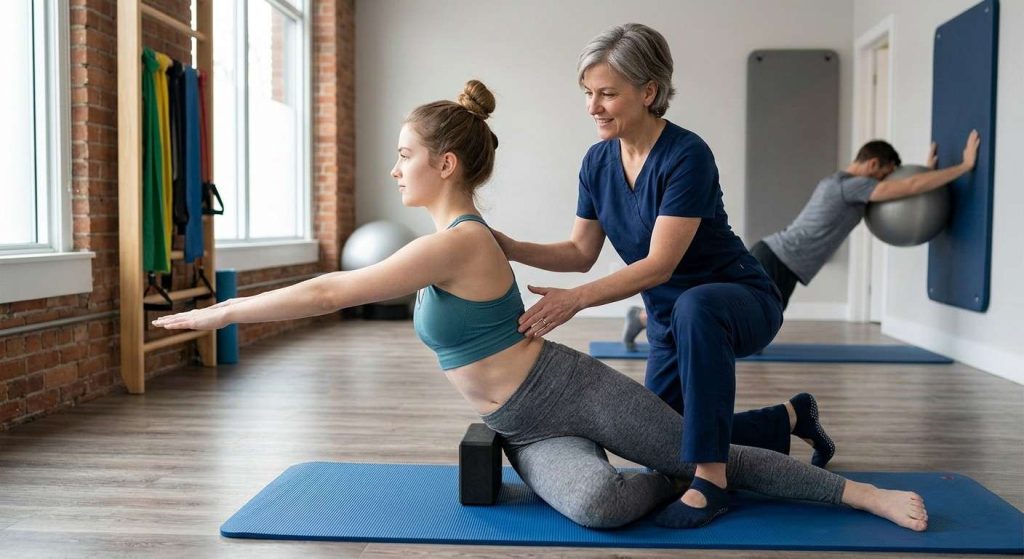
Exercise therapy in the case of scoliosis may incorporate strength training, stretching, posture training, balance training, breathing exercises, and movement training. An experienced physiotherapist will evaluate your curve, symptoms, mobility, and strength and create an appropriate exercise regimen.
Understanding the role of physiotherapists and other allied health professionals can also help readers understand how movement and exercise professionals support rehabilitation and physical function.
Exercises and Scoliosis in Adults
Adults should not have any hopes to lower their Cobb angle due to exercises but rather to enhance their quality of life and functioning. Exercise therapy may help adults through:
- Easing chronic lower back pain
- Building muscle strength to stabilize degenerated joints
- Improving your balance and minimizing your fall risks
- Keeping your bones healthy because of weight-bearing exercise
Adults can exercise effectively using walking, low-impact strength training, water-based exercise, and physiotherapy. Regular walking can also support mobility and general fitness; see this guide on whether walking is enough to stay healthy and fit.
Those with severe back pain, weakness in legs, or numbness should seek consultation from a spinal specialist before embarking on any form of exercise.
Exercises to Approach With Caution
However, there are certain movements that may require additional advice:
- High loads on the spine, like maximal squats or deadlifts, when lifting improperly
- Frequent hyperextension of the spine that is rotated
- High-impact sports in case your curvature is big or unstable
- Playing one-sided sports like tennis or golf is okay, but balance them with exercises for the other side
Sports don’t cause scoliosis, and the majority of teenagers can be physically active despite their condition. Consult your physician regarding your particular restrictions.
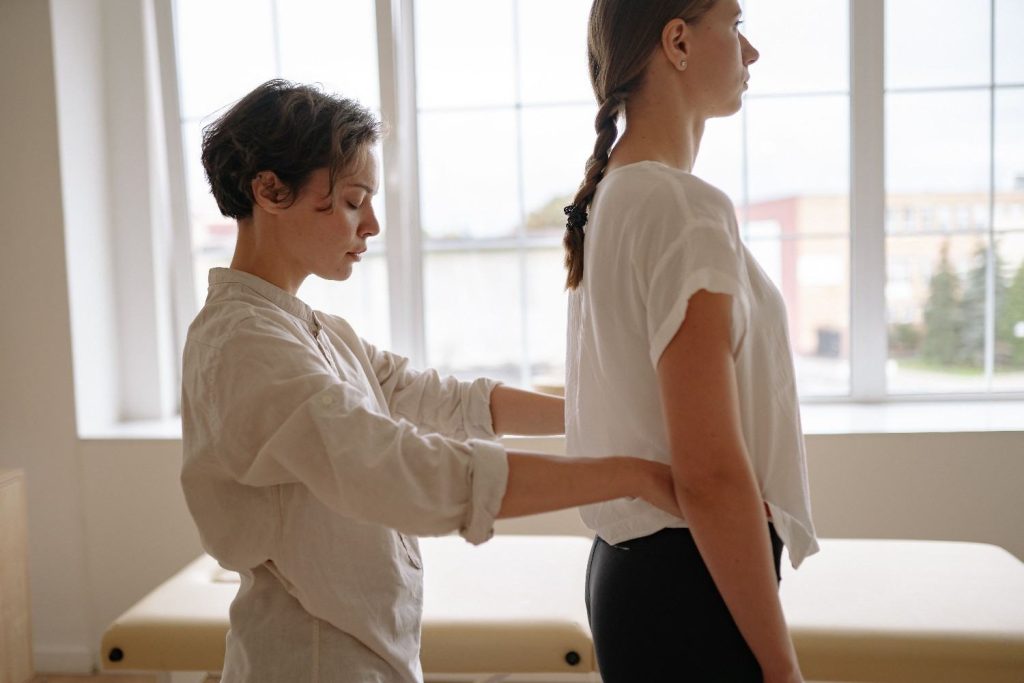
Scoliosis-Specific Exercise Methods
Scoliosis-specific exercises are tailored towards the curvature of each individual. According to SOSORT (Society on Scoliosis Orthopaedic and Rehabilitation Treatment) international guidelines, SSE is indicated in cases of mild scoliotic curves, as well as being used alongside bracing.
Schroth Method
In the Schroth method, three-dimensional correction is applied. The trained therapist trains an individual how to elongate his/her spine, derotate the trunk, and employ rotational breathing to widen narrowed regions of the ribcage. SSE programs normally incorporate supervised sessions along with daily home practice.
SEAS (Scientific Exercise Approach to Scoliosis)
In SEAS, active self-correction, stabilization, and dynamic function are emphasized. Trained therapists teach patients how to maintain their best postures while undertaking daily activities.
Other Approaches
Lyon method, side-shift therapy, and Dobomed are also mentioned in the literature. All have similar goals of self-correction, spinal stabilization, and control of the trunk region.
Do Exercises Help Scoliosis in Adults?
Yes. Exercises for adults with scoliosis are aimed at pain relief, maintaining mobility, and independence. The program for adults includes:
- Core and hip muscle strengthening
- Balance work to reduce falls
- Walking and low-impact cardio training
- Posture and gait correction
For adults with degenerative scoliosis, it is important to have discussions with their physician regarding bone condition, nerve symptoms, and pain relief.
Pros and Cons of Exercise for Scoliosis
| Pros | Cons |
| Can improve general strength | Does not guarantee spinal curve correction |
| Supports mobility | Some exercises may aggravate symptoms |
| Can improve balance and body awareness | Generic exercises may not suit every curve pattern |
| May help some scoliosis-related pain | Incorrect technique can increase discomfort |
| Supports healthy physical activity | Some people need professional supervision |
| Can improve confidence with movement | Exercise cannot replace bracing or surgery when those treatments are medically indicated |
Physical Therapy for Scoliosis
The physical therapist creates a personalized exercise regimen according to the curve characteristics, age, pain levels, and goals. This step is critical because two patients with scoliosis may need completely different exercises due to differences in their symptoms.
What a physical therapist does
- Measures your posture, range of motion, and muscle strength
- Teaches how to improve your posture during routine activities
- Creates an at-home exercise regimen and monitors your technique
- Modifies your exercises depending on symptoms or curve changes
- Collaborates with your physician, orthotist, or surgeon
Conclusion
Exercise can be very helpful in the management of scoliosis since it will improve muscle strength, flexibility, posture, balance, mobility, and physical function in general. They can also alleviate discomfort and assist in performing daily activities. However, exercises alone cannot treat the problem because they cannot correct spinal curves. Consult a physiotherapist for a personalized exercise program.